Snook
Short-finned Seapike, Pike
Sphyraena novaehollandiae
Overview
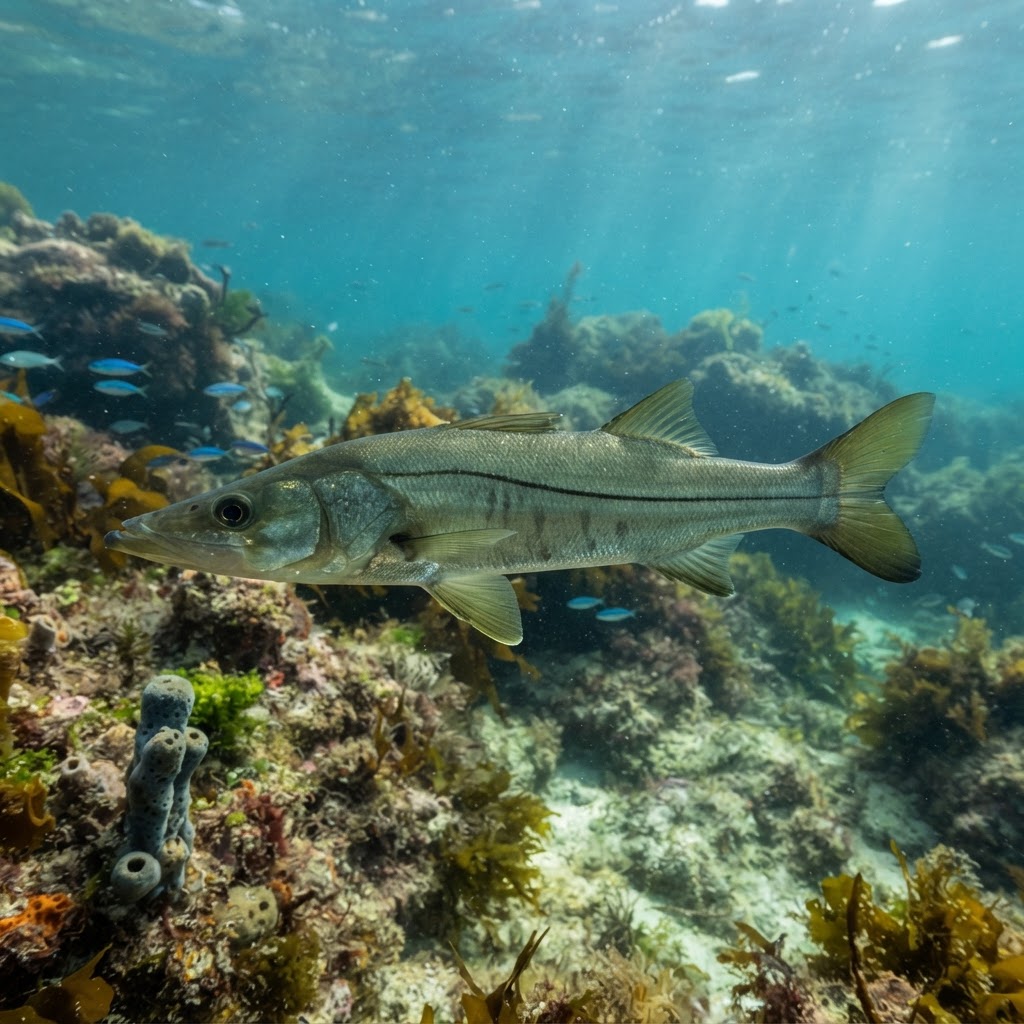
Snook are one of South Australia's most underrated sportfish — fast, aggressive and great on light gear. They patrol seagrass edges and open gulf water, ambush lures and trolled baits with speed, and put up a determined, slashing fight for their size.
Quick Info
Identification
A long, slim, silver-green fish shaped like a mini barracuda, with a pointed snout, protruding lower jaw and faint dark bars along the upper flank.
Elongate body, sharp teeth in a long jaw, faint dark vertical bars along the upper flank, and a pike-like silhouette — unmistakable once seen.
Yellowtail Seapike (no dark bars, yellow caudal peduncle) — snook are the common seapike caught in SA gulfs and carry the distinct dark bars.
Where to Find Them
Typical depth: 1-15 m
Fishing environments: Shore, Jetty, Boat
When to Fish
How to Catch Them
Cast or troll small lures and baits along seagrass edges, drop-offs and current lines. Snook follow lures before striking — keep a steady retrieve and expect the hit right at the boat or beside the jetty pylon.
Small metal slices, hard-bodied lures and unweighted pilchard or garfish baits drifted back into a berley trail all account for snook.
Steady with occasional speed bursts — snook are drawn to a lure moving away at pace; vary the speed until you find the strike zone.
A hard, sudden smash — snook hit lures aggressively and often slash at the surface or jump on hookup.
Lure hooks generally set on contact — keep winding through the strike; on bait a firm lift is enough. Mind their sharp teeth when lipping.
Troll or cast small lures along seagrass edges on calm sunny days — snook are one of the easiest exciting fish to find in SA gulfs. Use a thicker fluorocarbon leader to guard against teeth.
Leaders too light that get sliced, stopping the retrieve when a following fish hesitates, and fishing too deep — snook often hunt near the surface.
Best Baits
Rigs & Gear
A simple but devastating setup — a small metal slice lure cast hard and retrieved fast through busting fish. This is how salmon, snook, trevally and tommy ruff get caught from beaches, jetties and boats all over South Australia.
A jighead with a soft plastic threaded on — the most versatile lure setup in fishing, worked slowly along the bottom for bream, flathead and snapper with a natural, bait-like action.
A strong, simple rig built around a live baitfish swimming naturally — the setup for kingfish, tuna, mulloway and big snook when only the real thing will do.
A whole pilchard threaded onto a string of ganged hooks — the classic rig for presenting a natural, fish-shaped bait that hooks salmon, mulloway and sharks wherever they strike the bait along its length.
A versatile and highly effective rig for King George Whiting and many other species.
Current SA Fishing Rules
CURRENT SA FISHING RULES
Method: Total length
Measured at: Measured from the tip of the snout to the tip of the tail.
Always check current regulations before fishing. Fishing rules and closures can change.
Keeping Your Catch
Grip behind the head carefully — teeth and gill plates are sharp. Use long-nose pliers to unhook and support the body.
If keeping snook, dispatch and bleed quickly; the flesh is firm and good eating when fresh.
Ice slurry immediately; snook keep well when chilled quickly.
Cleaning & Filleting
Gut and scale. Snook are simple to fillet down the backbone into long, clean fillets.
Long fillets come off the backbone easily; the body is round so follow the ribs closely.
Skin is thin and scales easily; leave on for grilling if you like.
Fillets are almost bone-free — a few pin bones near the head only.
Cooking
Firm white flesh suits crumbing and deep-frying, or flash-fried fillets with lemon. Smaller snook are excellent on the plate; very large fish can be stronger flavoured.
Where to Catch Them in SA

A4GW CREW
Get the good stuff from A4GW straight to your inbox.
No spam. Unsubscribe anytime.