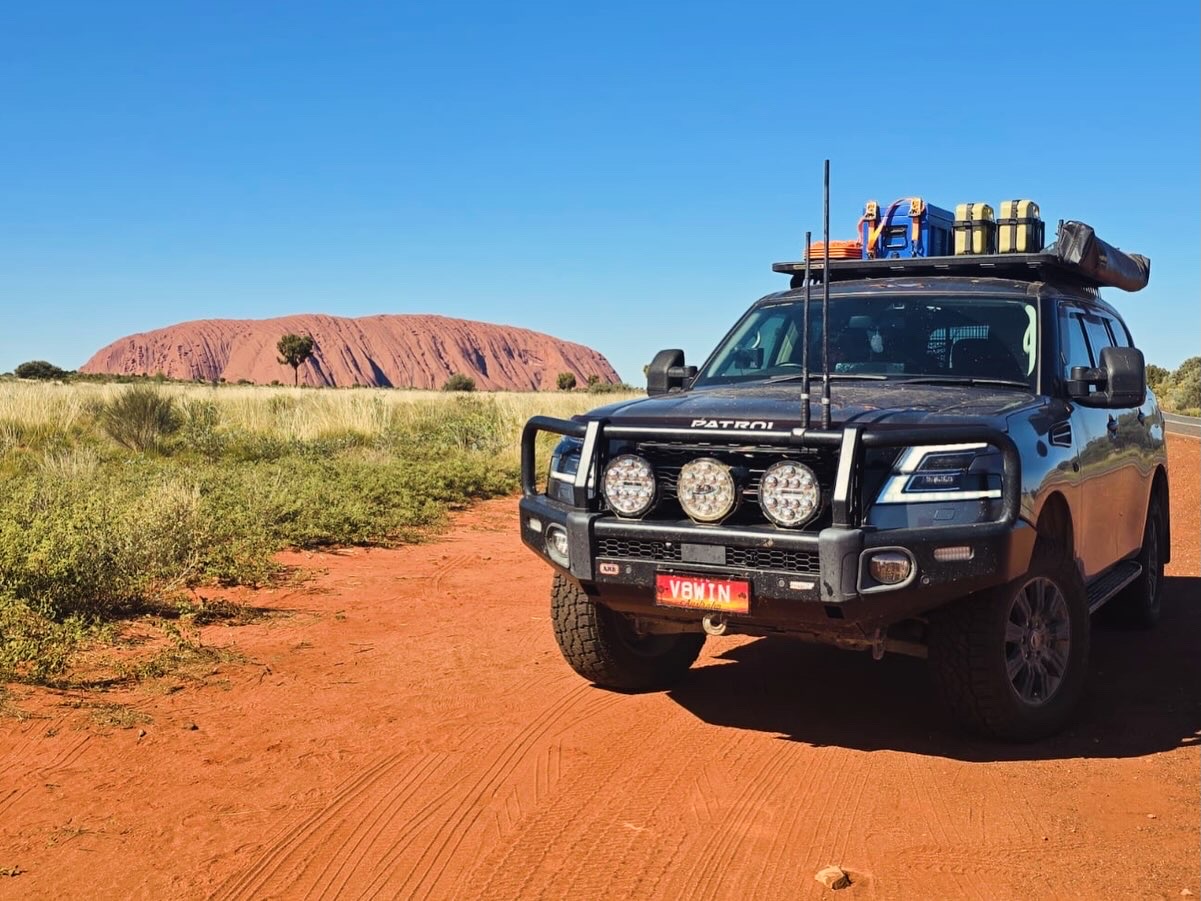
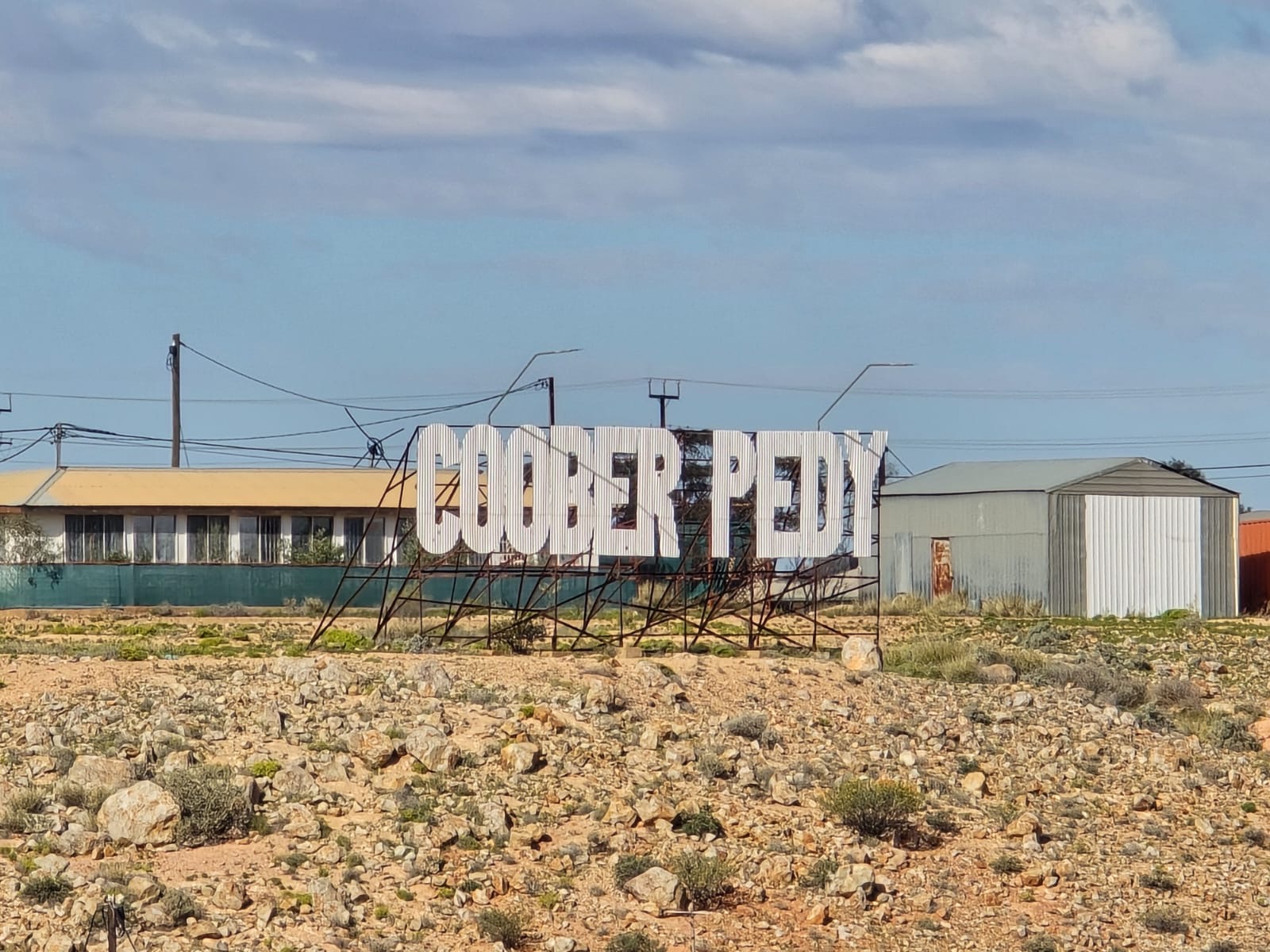
There aren't too many places in Australia where you arrive and immediately wonder what the hell you're looking at.
Coober Pedy is one of them.
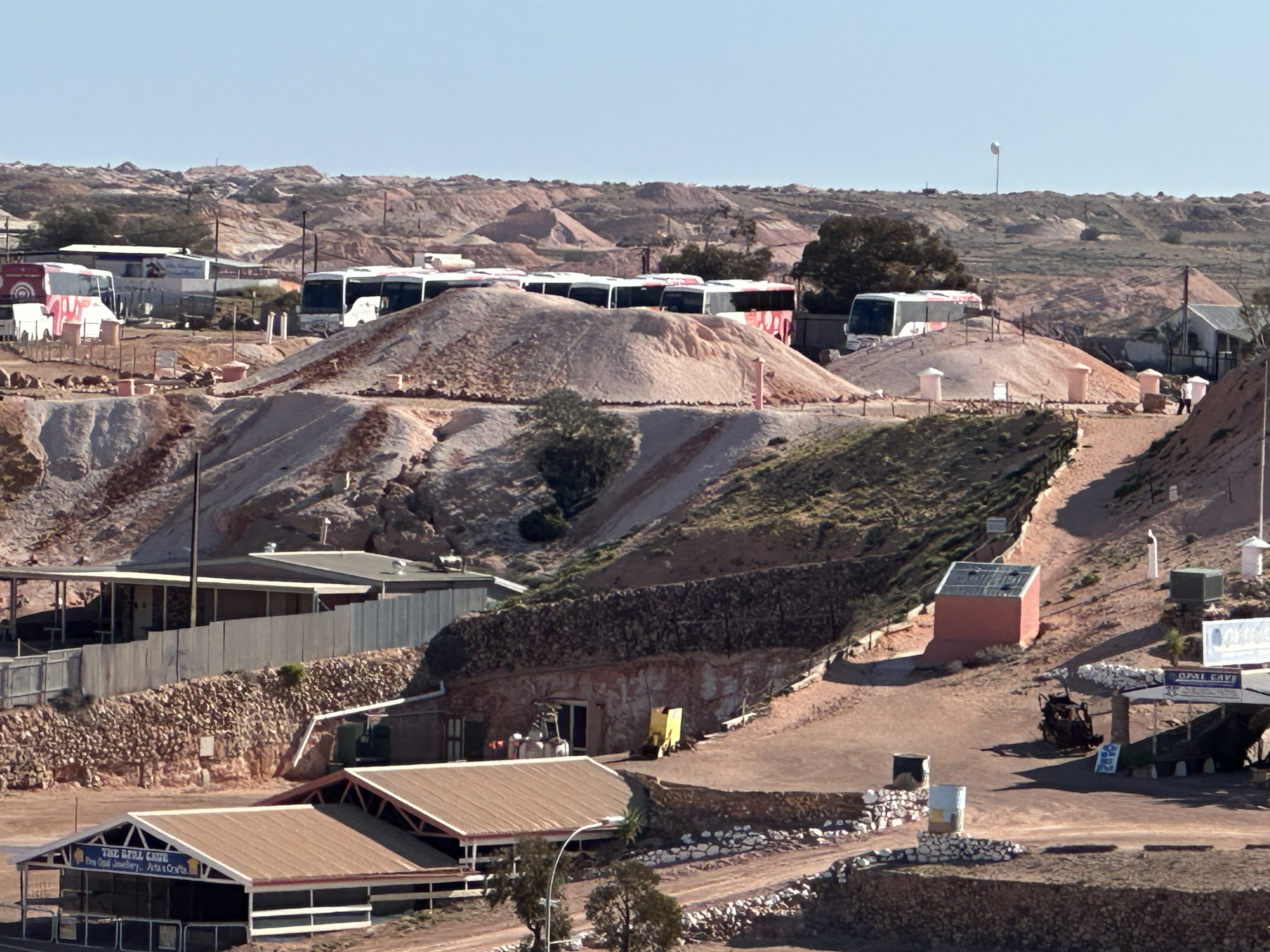
Sitting on the Stuart Highway around 850km north of Adelaide and 680km south of Alice Springs, Coober Pedy is surrounded by a dry, almost lunar landscape covered in thousands of piles of excavated dirt.
Then you start looking around town and realise something else is missing.
Houses.
That's because a huge part of Coober Pedy is underground.
Known as the Opal Capital of the World, Coober Pedy has a population of around 2,000 people and a history built almost entirely around opal mining, extreme outback conditions and the people who came here hoping to strike it lucky.
We'd been through Coober Pedy before, but this time we wanted to stop and actually explore it properly.
We ended up extending our stay.
And after spending a few days here, we can definitely say Coober Pedy deserves more than an overnight stop on the Stuart Highway.
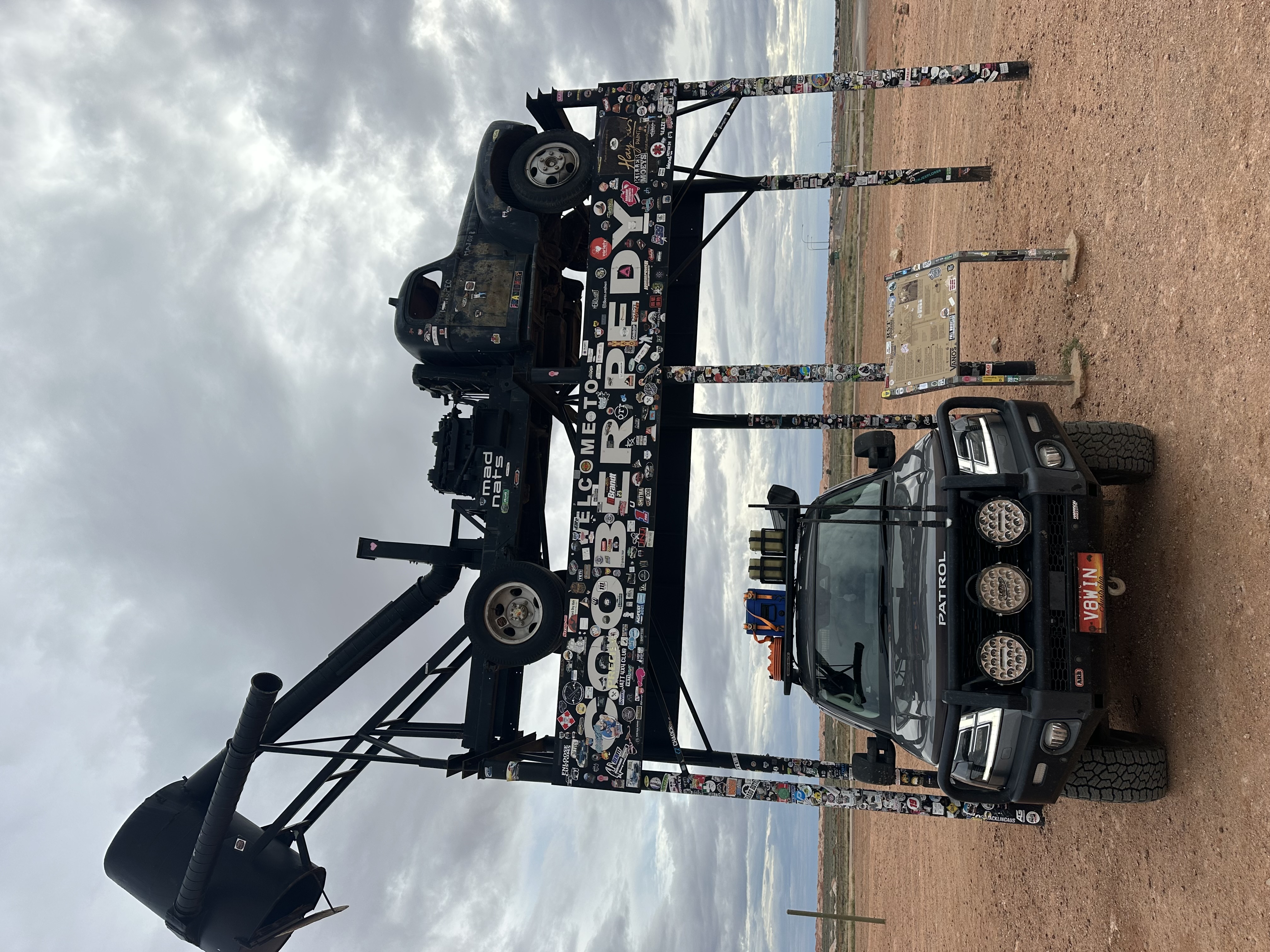
The History of Coober Pedy
Long before opal miners arrived, Aboriginal people travelled through this part of South Australia for thousands of years, moving through the desert according to the availability of food and water.
European exploration of the area came much later, with John McDouall Stuart travelling through the region in 1858. The area eventually became known as the Stuart Range.
But the story that created modern Coober Pedy really began in 1915.
A group called the New Colorado Prospecting Syndicate had been searching unsuccessfully for gold when 15-year-old William Hutchison discovered pieces of opal on the surface.
Within days, the first opal claim had been pegged.
The conditions were brutal.
There was very little surface water, almost no building material, extreme summer heat and enormous distances between settlements and supplies.
But there was opal.
That was enough to keep people coming.
The area became known as the Stuart Range Opal Field and miners slowly began arriving in search of their fortune.
By 1920 the population had grown enough that the settlement needed an official name.
The name Coober Pedy was chosen, derived from an Aboriginal term commonly translated as "white man in a hole."
It turned out to be a pretty accurate description.
Why Is Coober Pedy Underground?
Living underground wasn't originally some clever tourism idea.
It was practical.
Summer temperatures around Coober Pedy can climb well above 35°C, while the surrounding landscape provides very little natural shade.
Early miners quickly discovered that digging into the hills created a much more comfortable place to live.
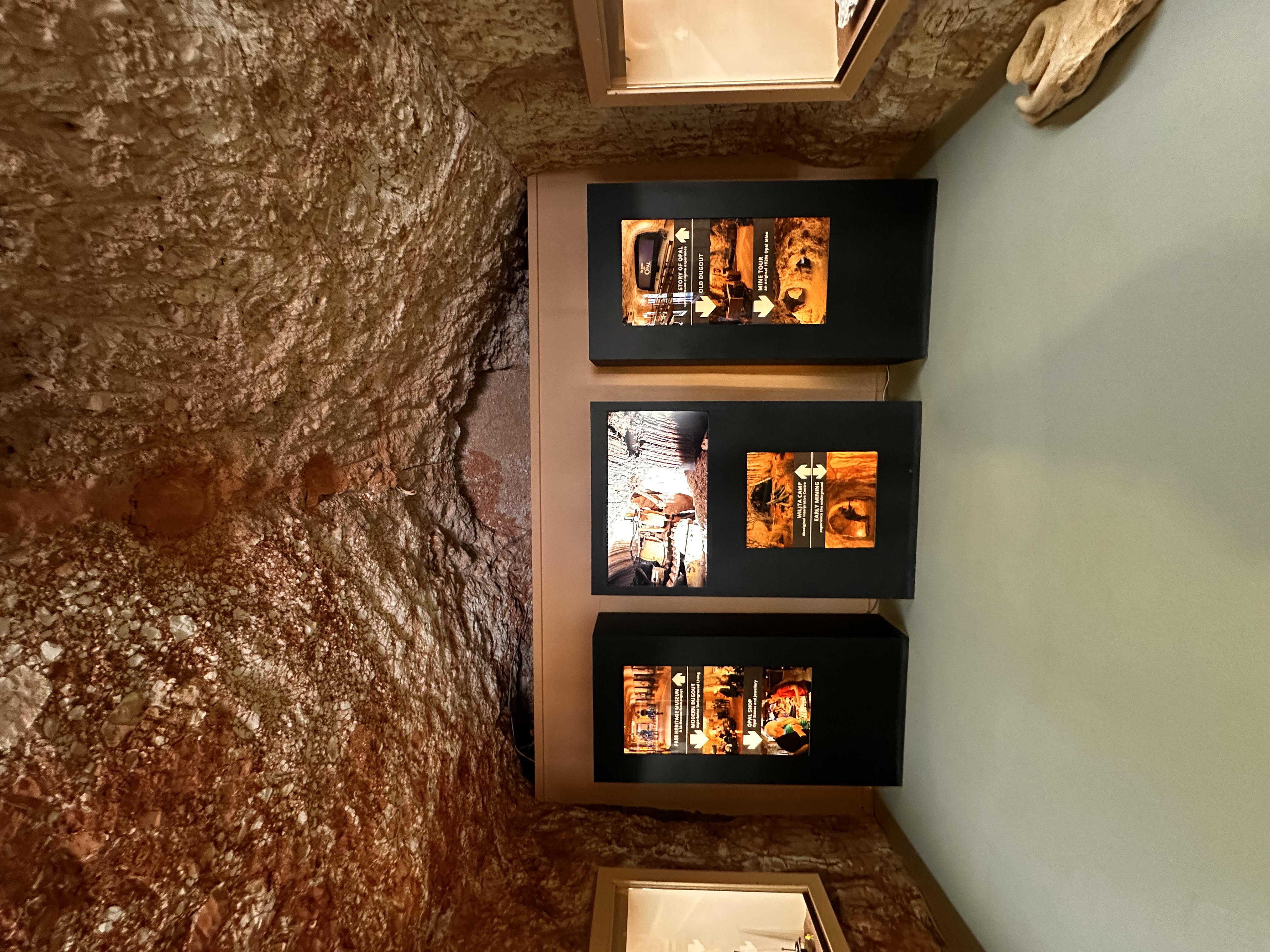
These underground homes became known as dugouts.
Returned soldiers from the First World War also helped develop underground living in the area, bringing experience gained from digging trenches and underground shelters.
The idea stuck.
Temperatures inside dugouts generally remain around 23–25°C throughout the year without needing the same level of heating and cooling as a conventional house.
Today, underground living is simply part of Coober Pedy.
There are underground homes, churches, museums, shops, galleries, accommodation and old mines.
Some are basic.
Others are enormous.
Once you've spent some time inside one, the whole idea actually makes a lot of sense.
The Opal Capital of the World
Everything in Coober Pedy comes back to opal.
Millions of years ago, this part of Australia was covered by an inland sea.
As the landscape changed, silica-rich water moved through cracks and cavities underground. Over enormous periods of time, some of those deposits eventually formed opal.
That geological process created one of the world's most famous opal mining regions.
Mining has left an unmistakable mark on the landscape.
Drive around the outskirts of Coober Pedy and there are spoil heaps everywhere.
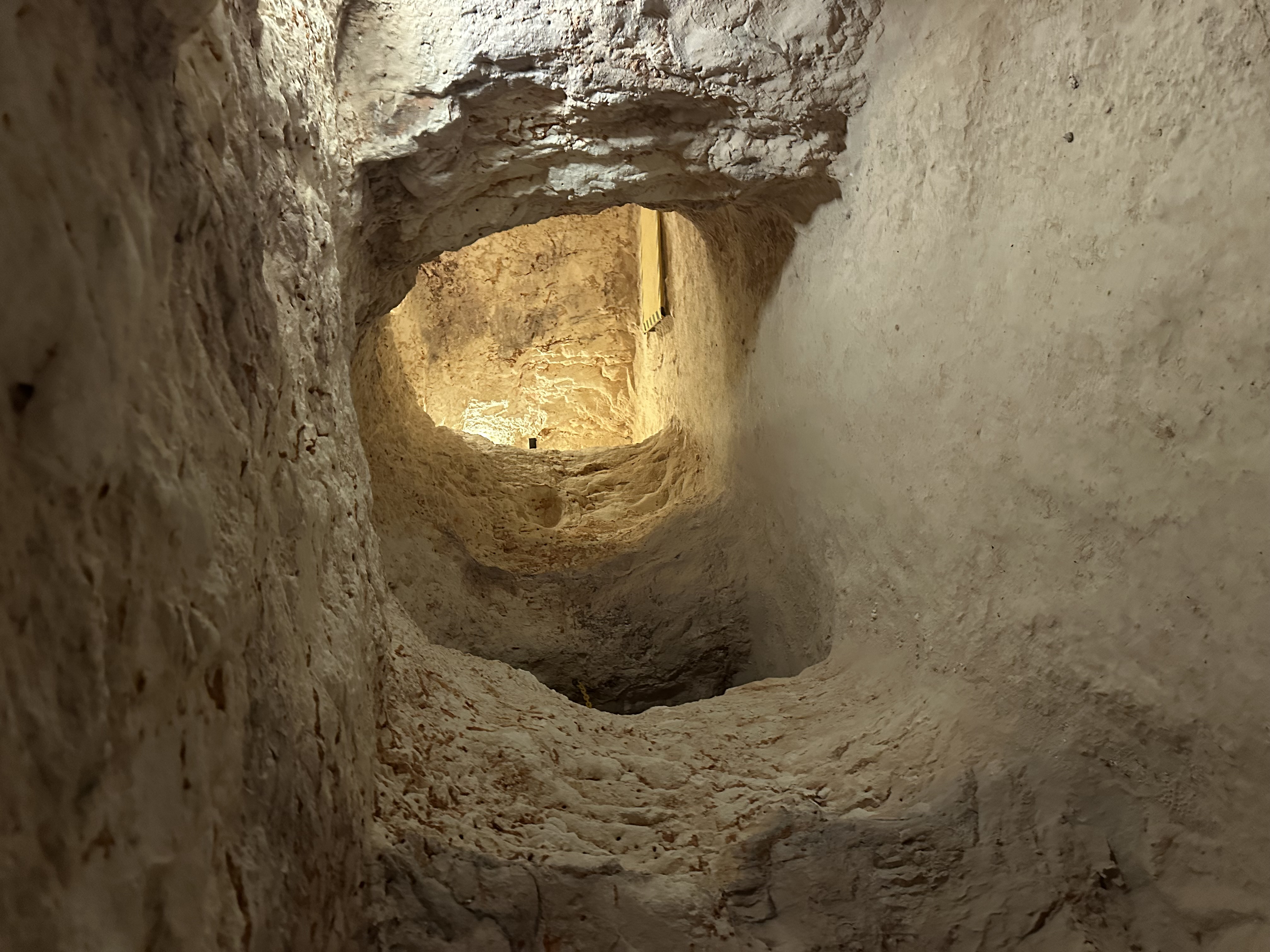
Those strange piles of dirt are material removed from underground as miners searched for opal.
And where there's a pile of dirt, there can also be a hole.
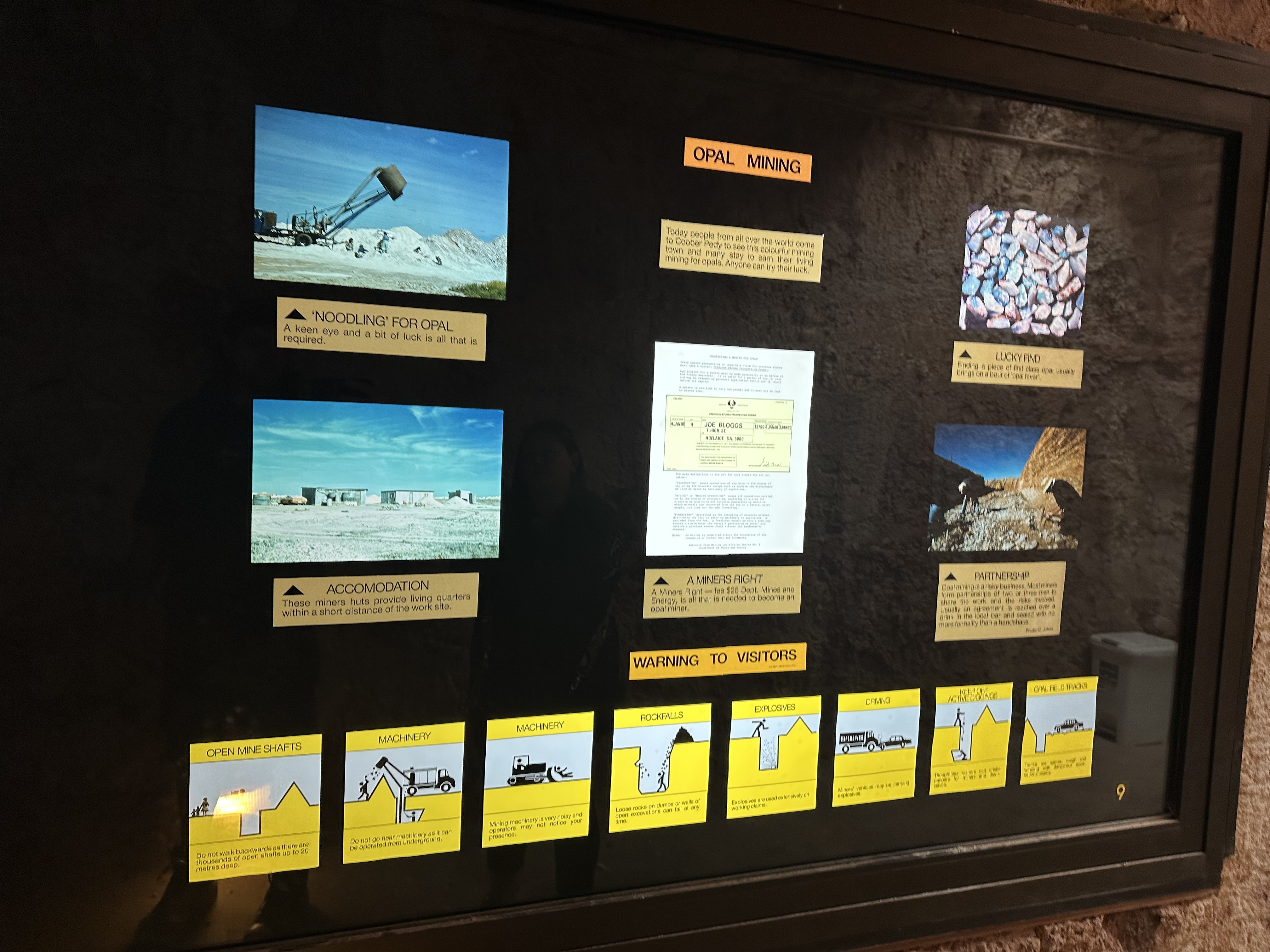
There are estimated to be more than 1.5 million open shafts throughout the wider Coober Pedy opal fields, with some reaching around 30 metres deep.
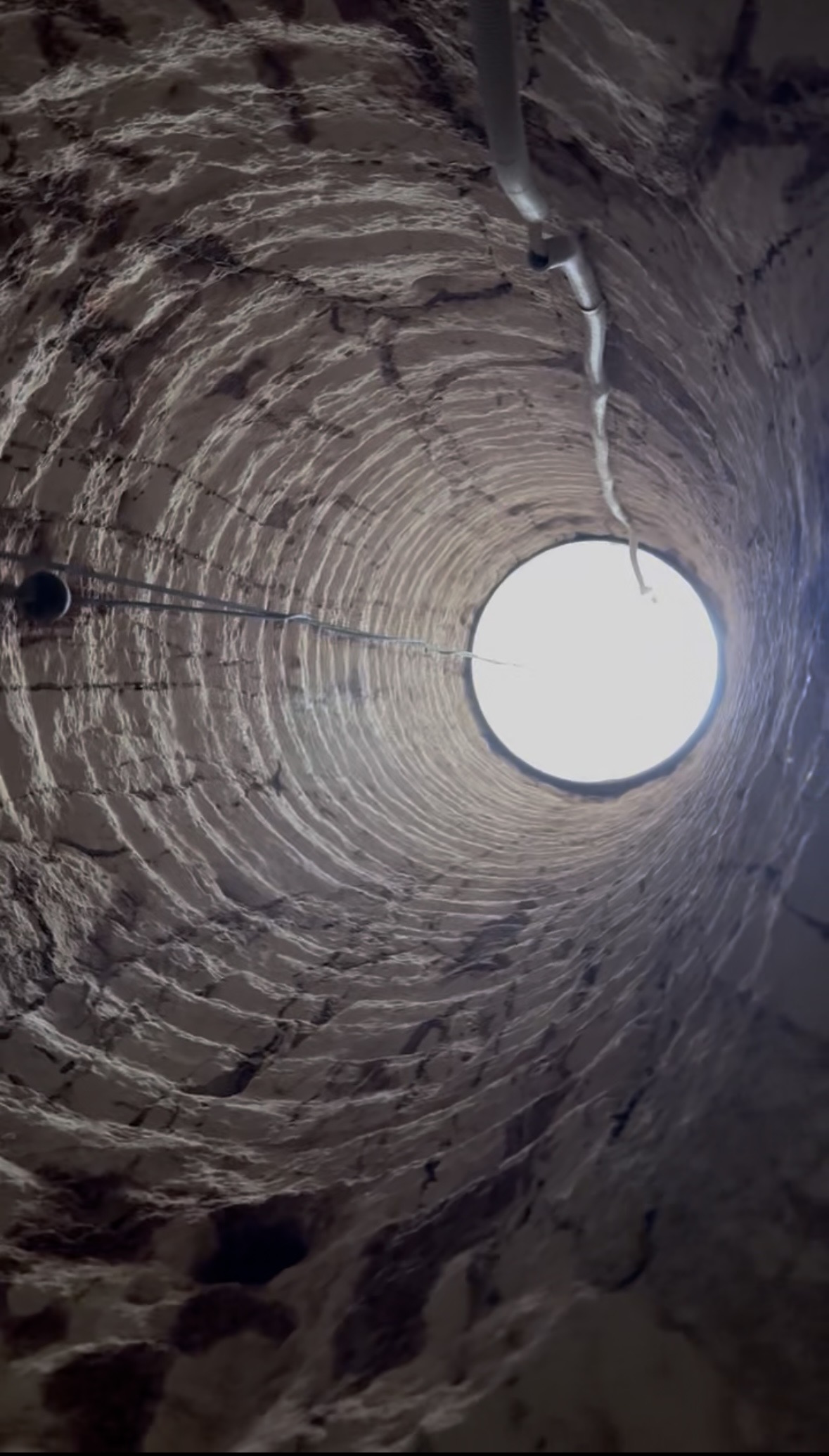
So this definitely isn't somewhere to randomly wander around the mining fields.
Stick to designated areas and established tracks.
Where We Stayed – Tomcat Hill Caravan Park
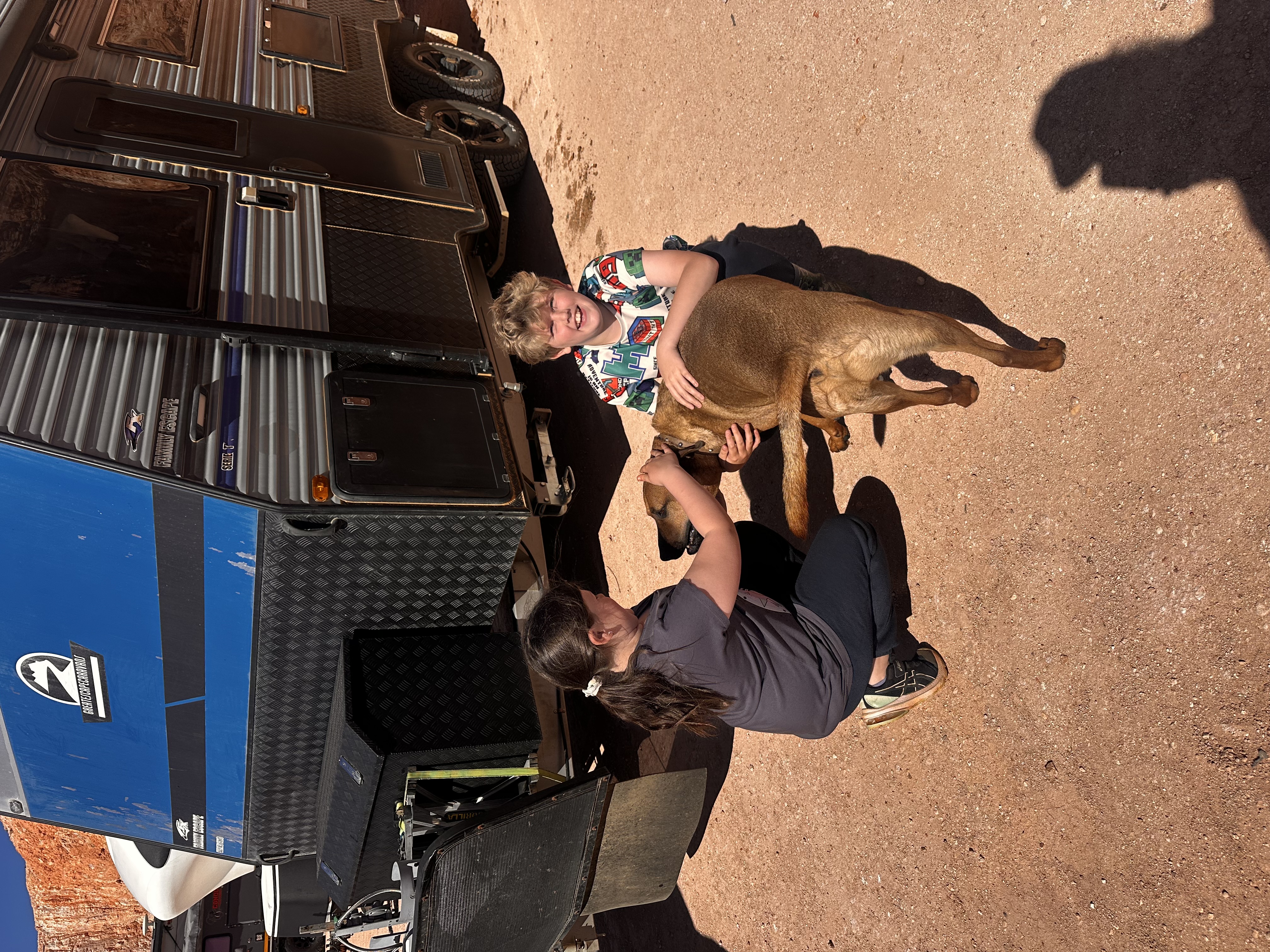
We stayed at Tomcat Hill Caravan Park, and it ended up being one of the things we really liked about our time in Coober Pedy.
Tomcat Hill is a small caravan park sitting high above the surrounding country with huge views out towards the Breakaways.
It feels much more like an outback camp than a big commercial caravan park.
And that suited us perfectly.
The park has powered and unpowered sites, with powered sites offering water and sullage connections.
There are toilets and showers, a camp kitchen, BBQ facilities and a washing machine, along with a communal campfire when conditions allow.
It's also pet friendly.
Being a smaller park gives it a completely different feel to staying in a large caravan park.
But the location is probably the biggest drawcard.
From up on the hill you get massive views across the surrounding outback, particularly around sunset.
You don't need to drive somewhere to watch the colours change over the desert.
You can sit at camp and watch it happen.
The kids also got to know the owners while we were there, which is one of those things you tend to remember about the smaller places.
We originally had a shorter stay planned in Coober Pedy.
We ended up extending it.
Tomcat Hill was a big part of why we were happy to hang around.
Tomcat Hill Caravan Park Facilities
- Powered sites
- Unpowered camping
- Water connections
- Sullage
- Toilets
- Showers
- Camp kitchen
- BBQ
- Washing machine
- Communal campfire when conditions allow
- Pet friendly
- Views towards the Breakaways
It is a small park, so booking ahead is definitely worth considering during the busier travelling months.
It can also get windy up on the hill.
But you don't get those views without being a little exposed.
Would we stay again? Absolutely.
What We Did in Coober Pedy
We fitted a lot into our stay.
Probably more than we originally expected.
That's the biggest thing we'd tell anyone planning to drive through Coober Pedy.
Don't automatically treat it as an overnight stop.
There's plenty here to keep a family busy for a few days.
Tom's Opal Mine
One of our favourite experiences in Coober Pedy was Tom's Opal Mine.
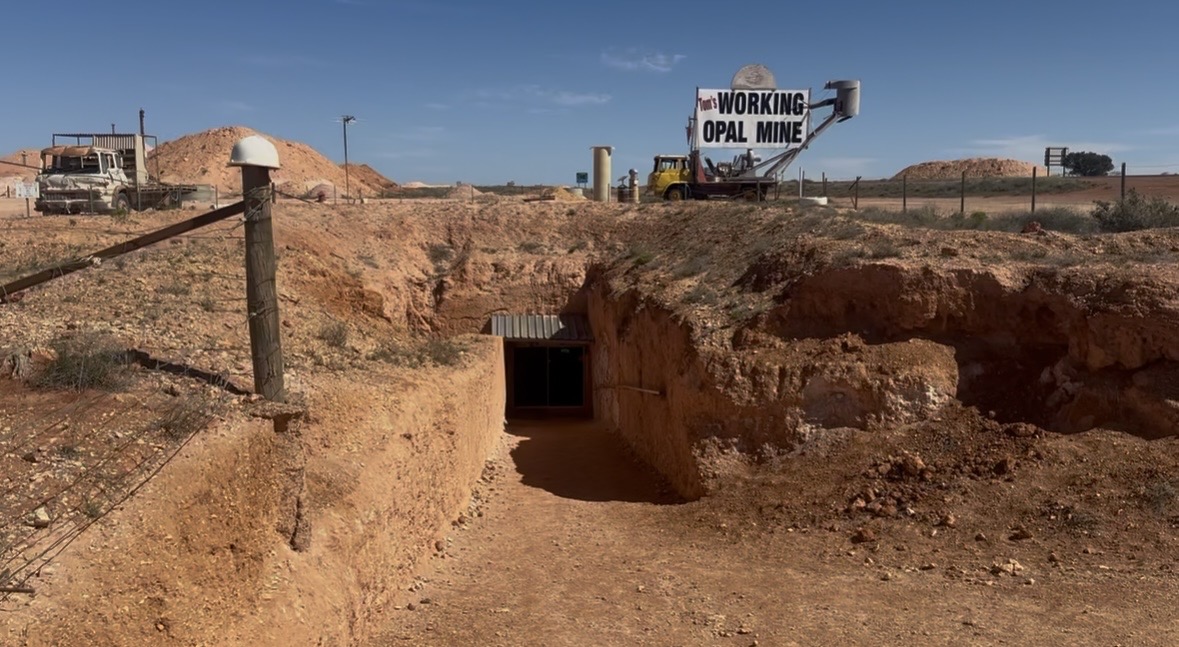
Tom's is an authentic opal mine that was worked during the 1980s and 1990s before being turned into a display mine.
Unlike simply walking through an underground building, you're actually entering old mine workings.
We did the guided underground tour.
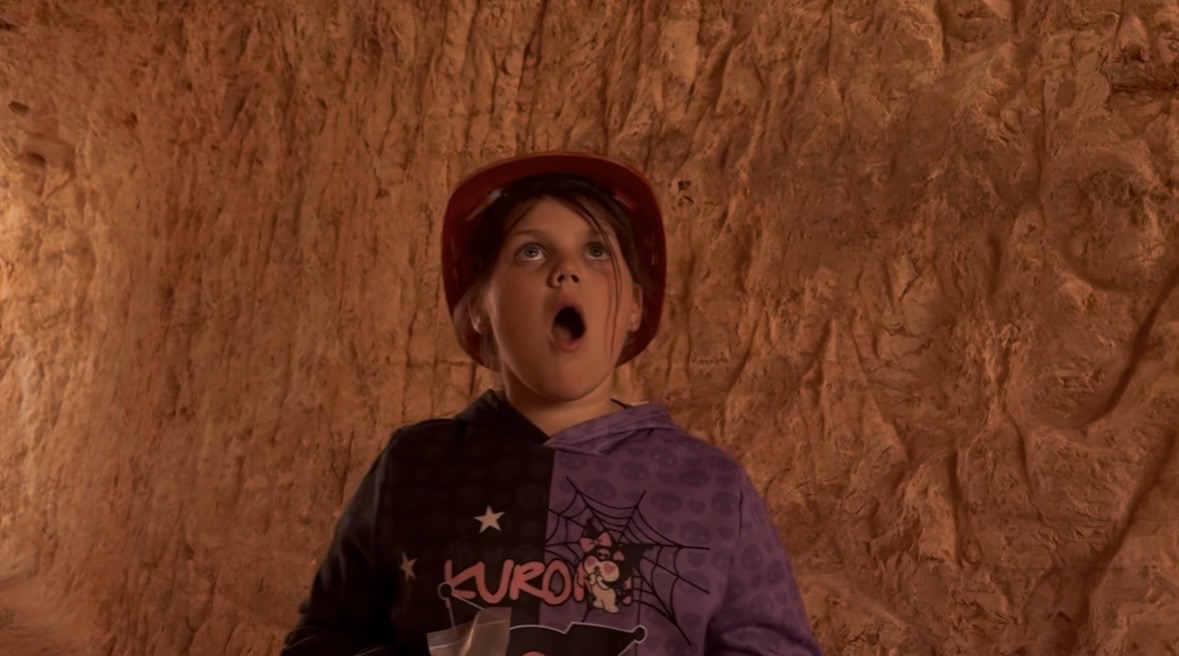
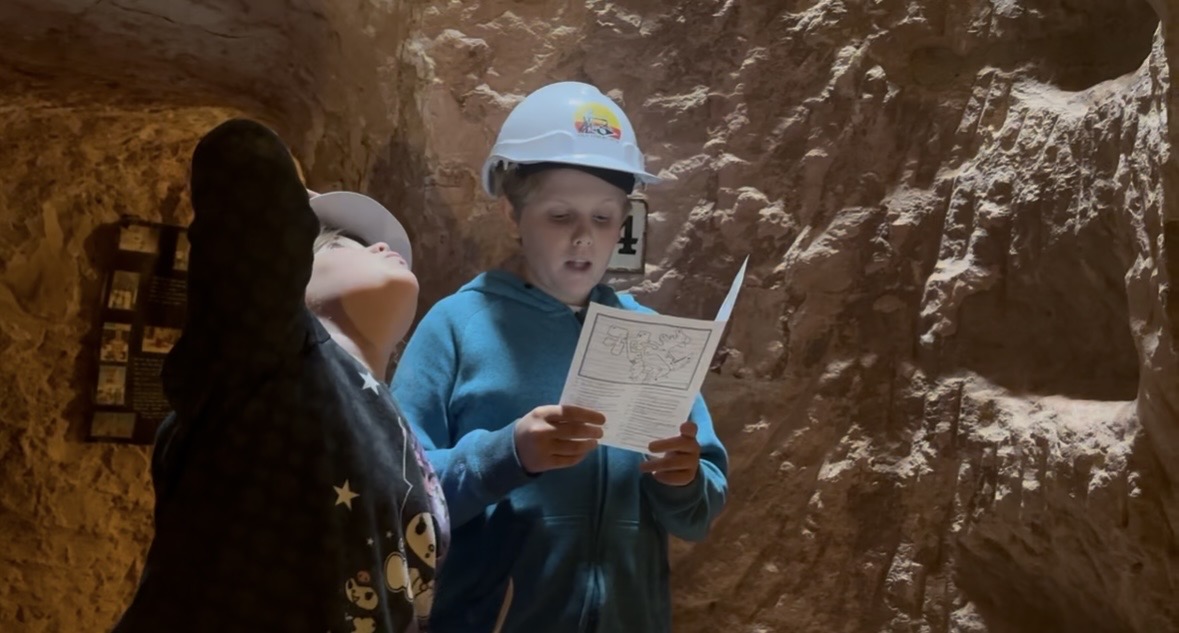
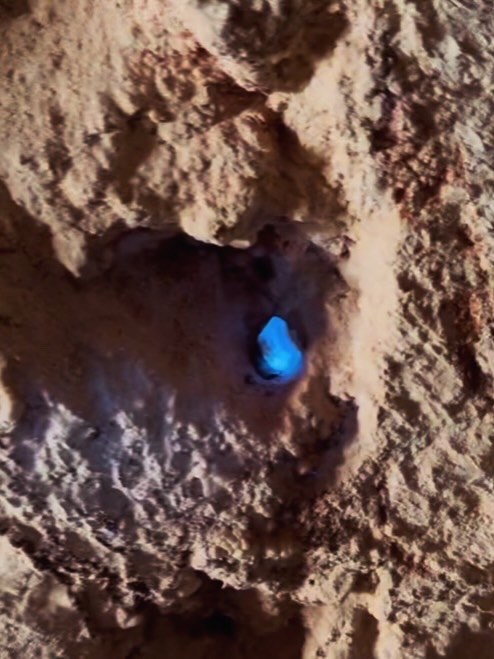
You head underground wearing mining helmets and black lights while learning about how opal is formed, how miners find it and how mining methods have changed over the years.
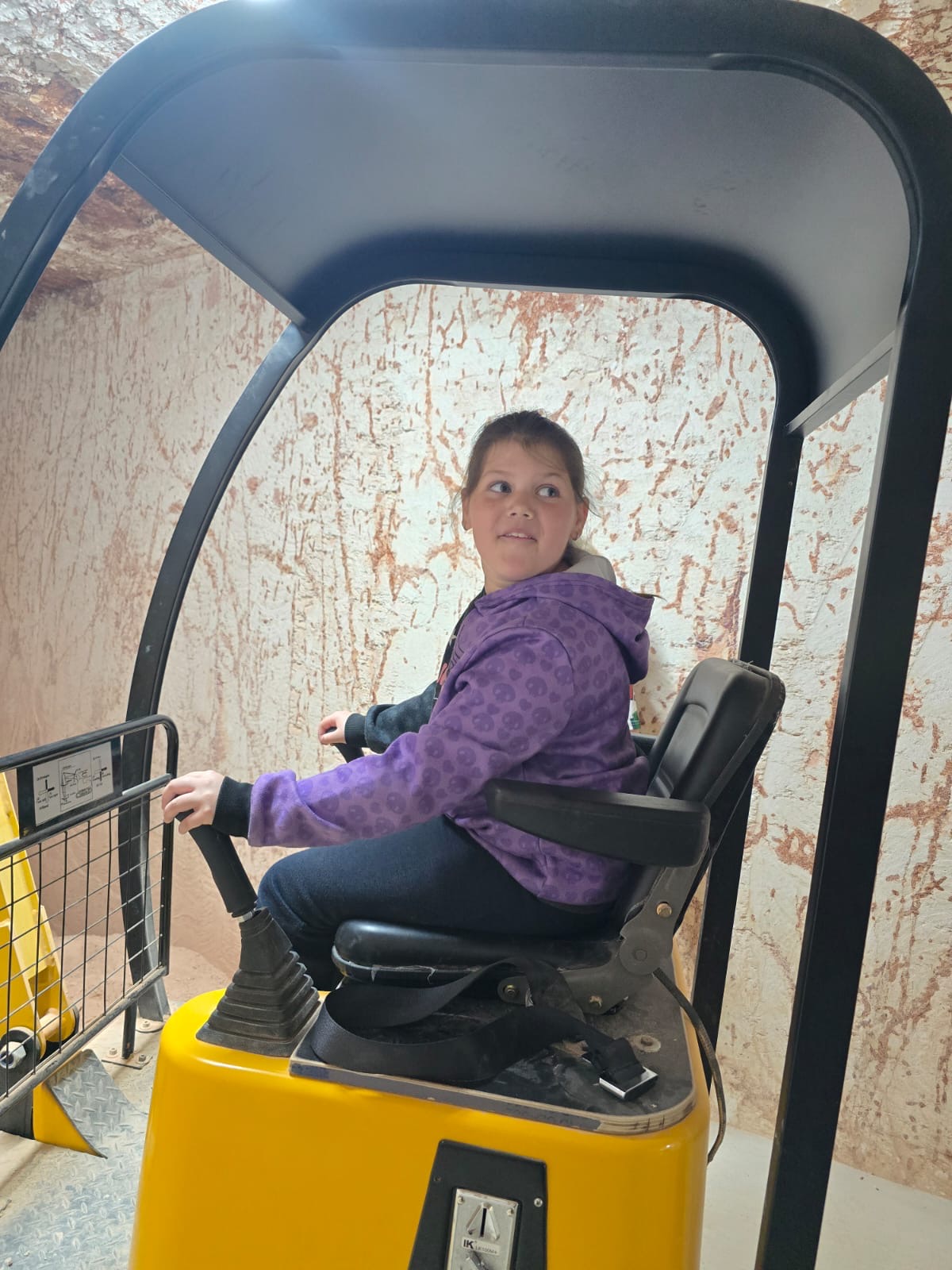
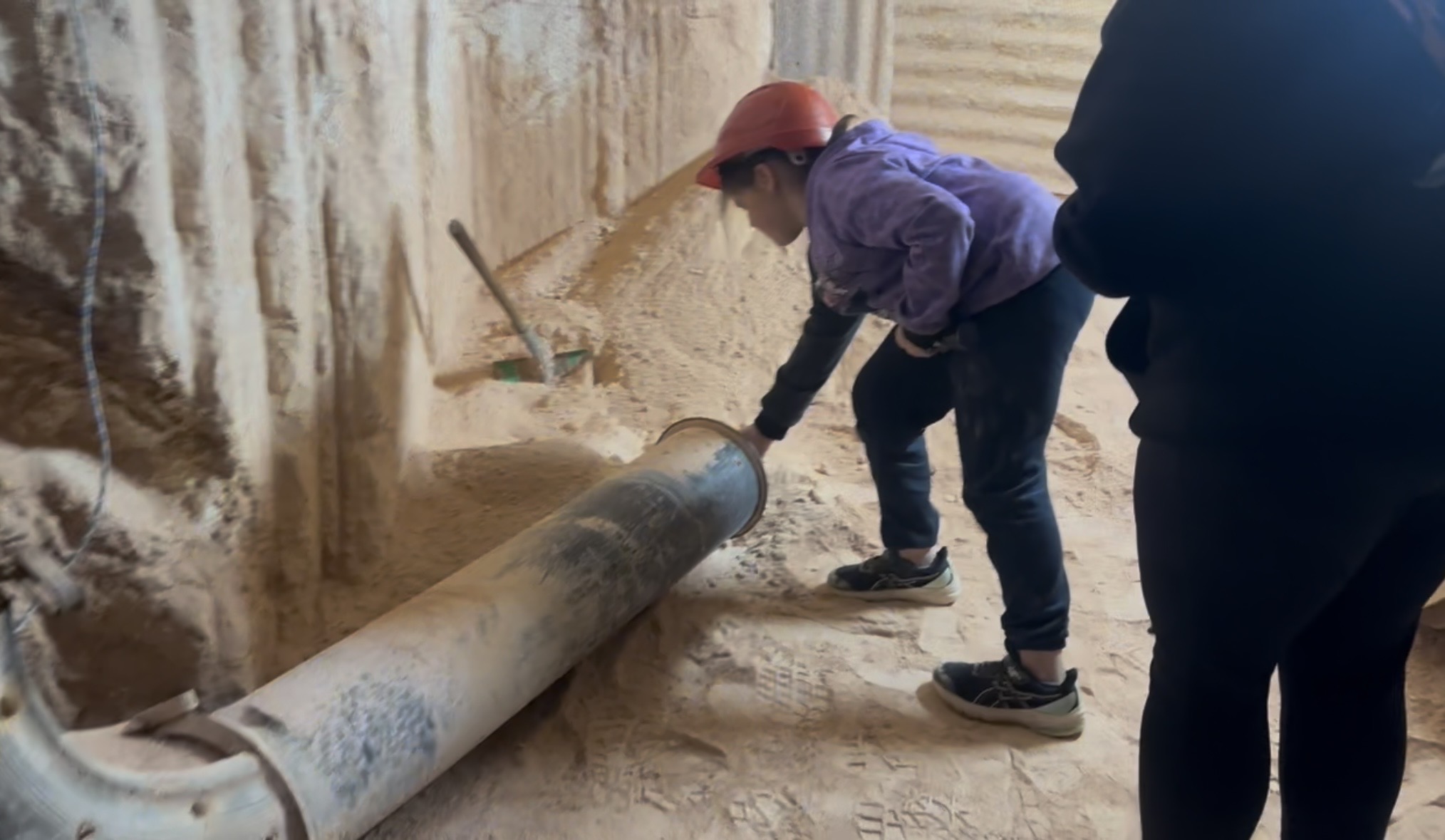
There are round and square tunnels, old explosive faces, drill shafts, hand workings, mining machinery and visible opal seams throughout the mine.
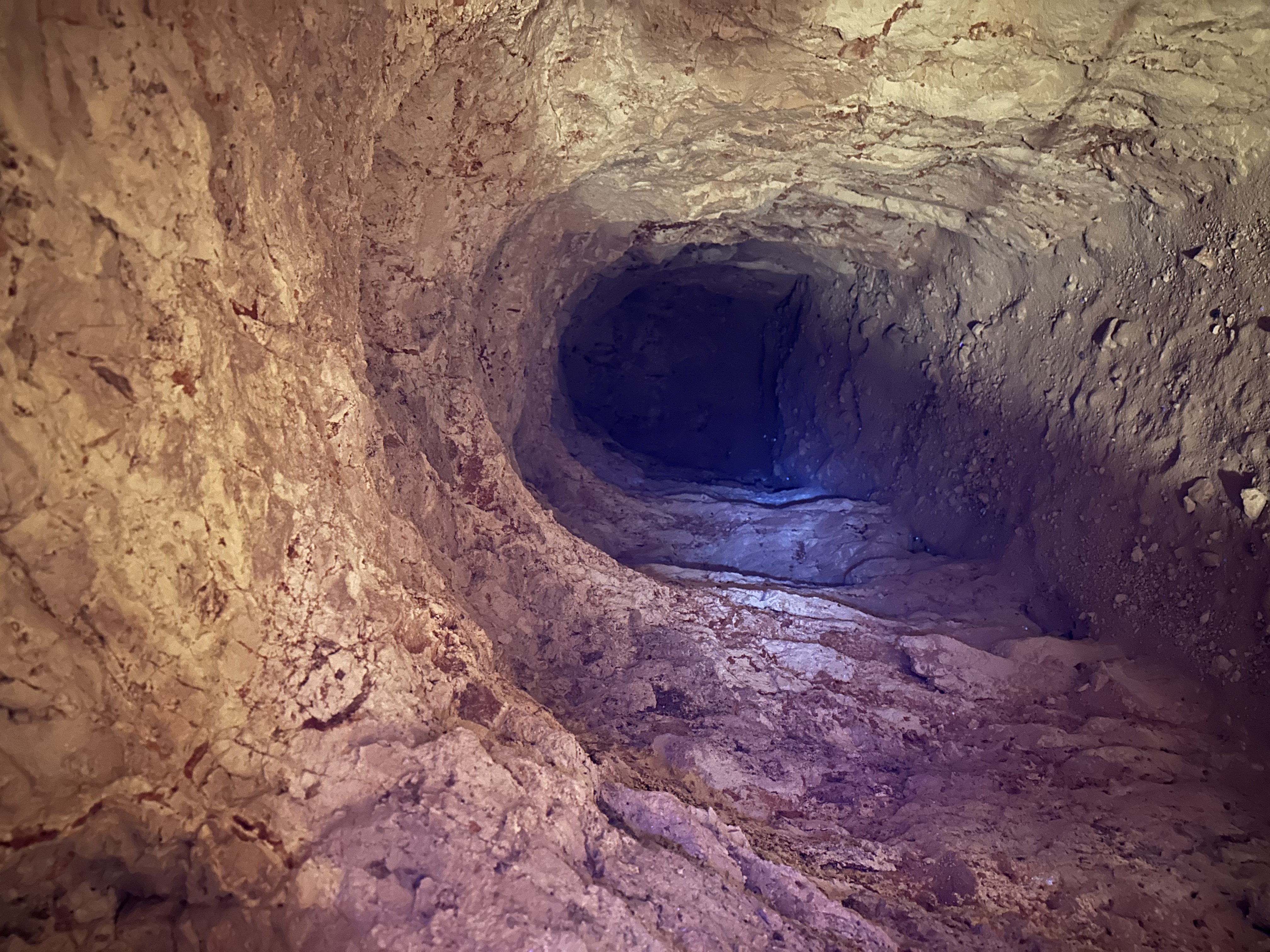
The tour also demonstrates some of the equipment used by miners, including the blower and bosun chair.
For the kids, being able to use the black lights and actually search around underground made it much more interesting than simply listening to someone talk about mining.
And then there was the Opal Buyer Experience.
Or, as he became known to us…
The Shonky Opal Buyer
The kids got to take their finds to the opal buyer and try to negotiate a deal.
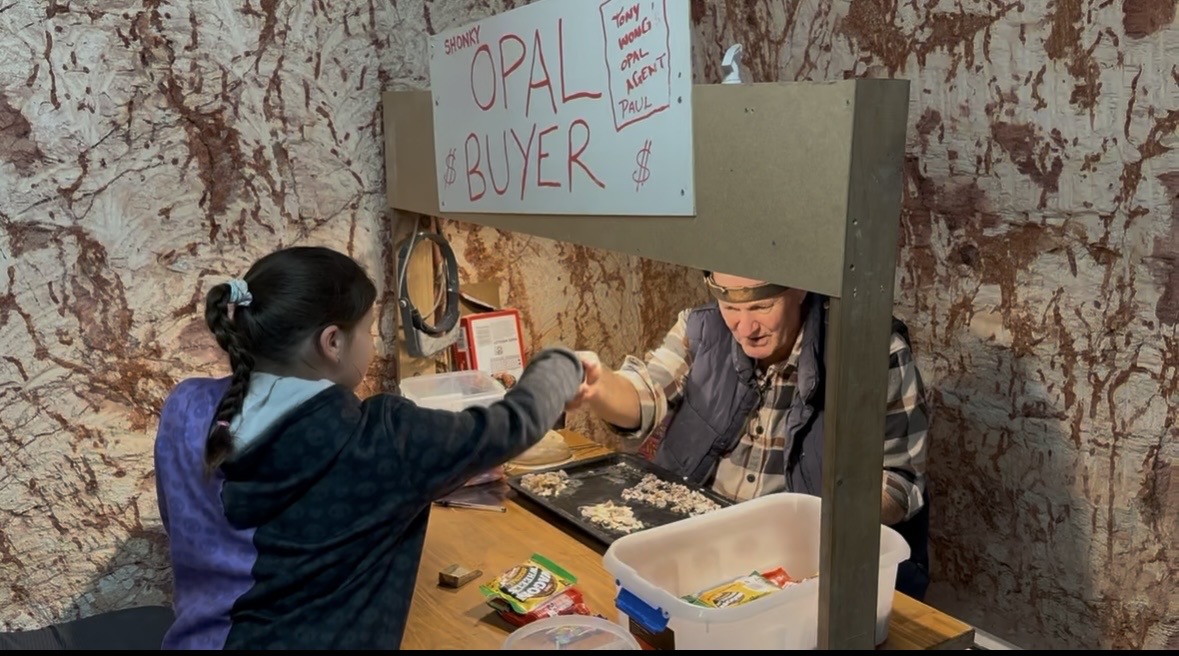
That became a pretty funny part of our Coober Pedy trip and ended up making it into our YouTube story.
There's something pretty entertaining about watching kids suddenly become hard-nosed opal dealers trying to work out whether they're being ripped off.

Tom's also has a noodling pit above the mine where you can search through genuine material brought in from the opal fields.
For us, Tom's was one of the best attractions for actually understanding how opal mining works, rather than simply seeing finished opals sitting inside a jewellery cabinet.
If you're visiting Coober Pedy with kids, we'd definitely put this one on the list.
Noodling for Opal
Once you start learning about opal, there's really only one logical next step.
Try to find some yourself.
Coober Pedy has designated areas where visitors can try noodling.
Noodling involves searching through discarded mining material for pieces of opal that may have been missed.
And yes…
We actually found some.
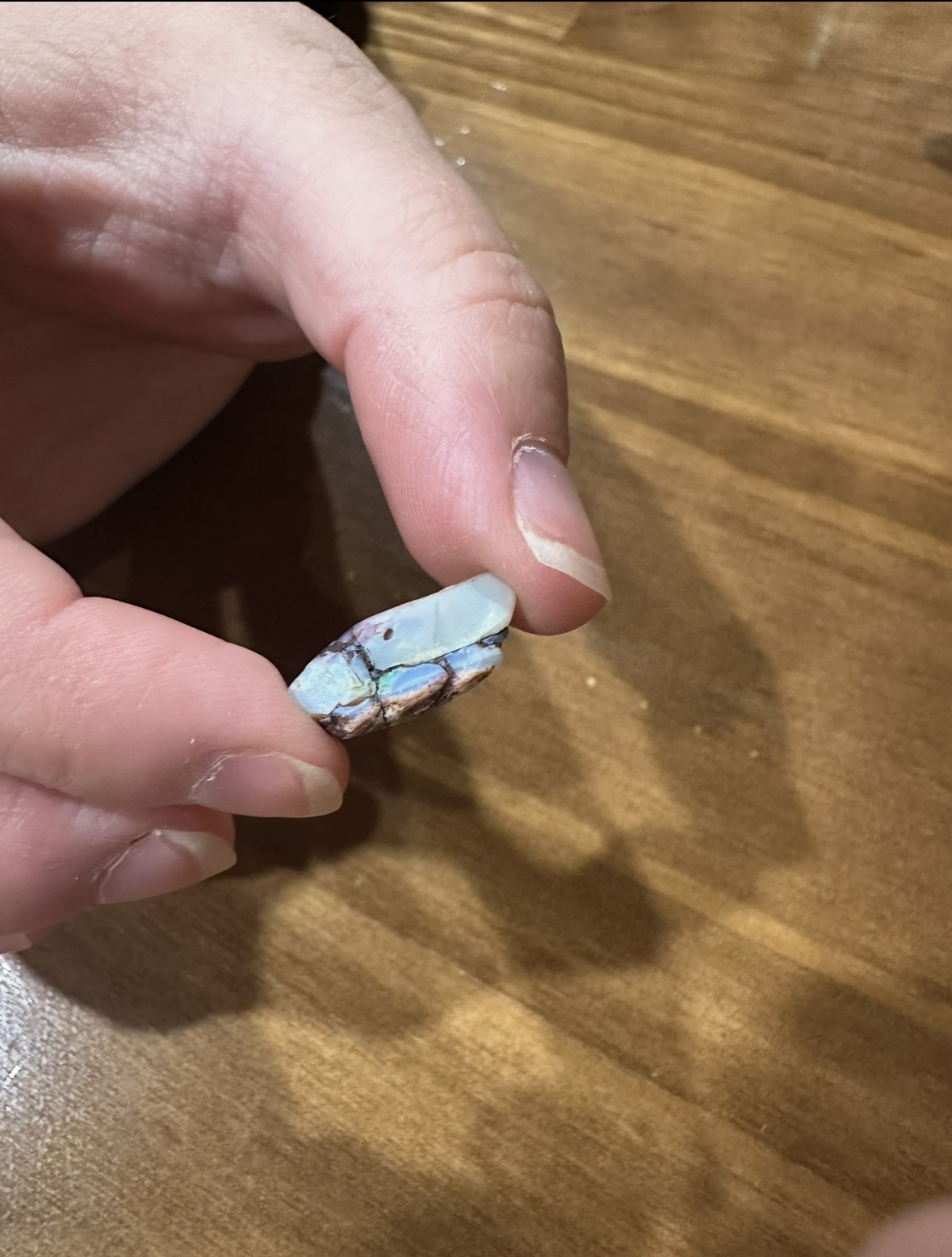
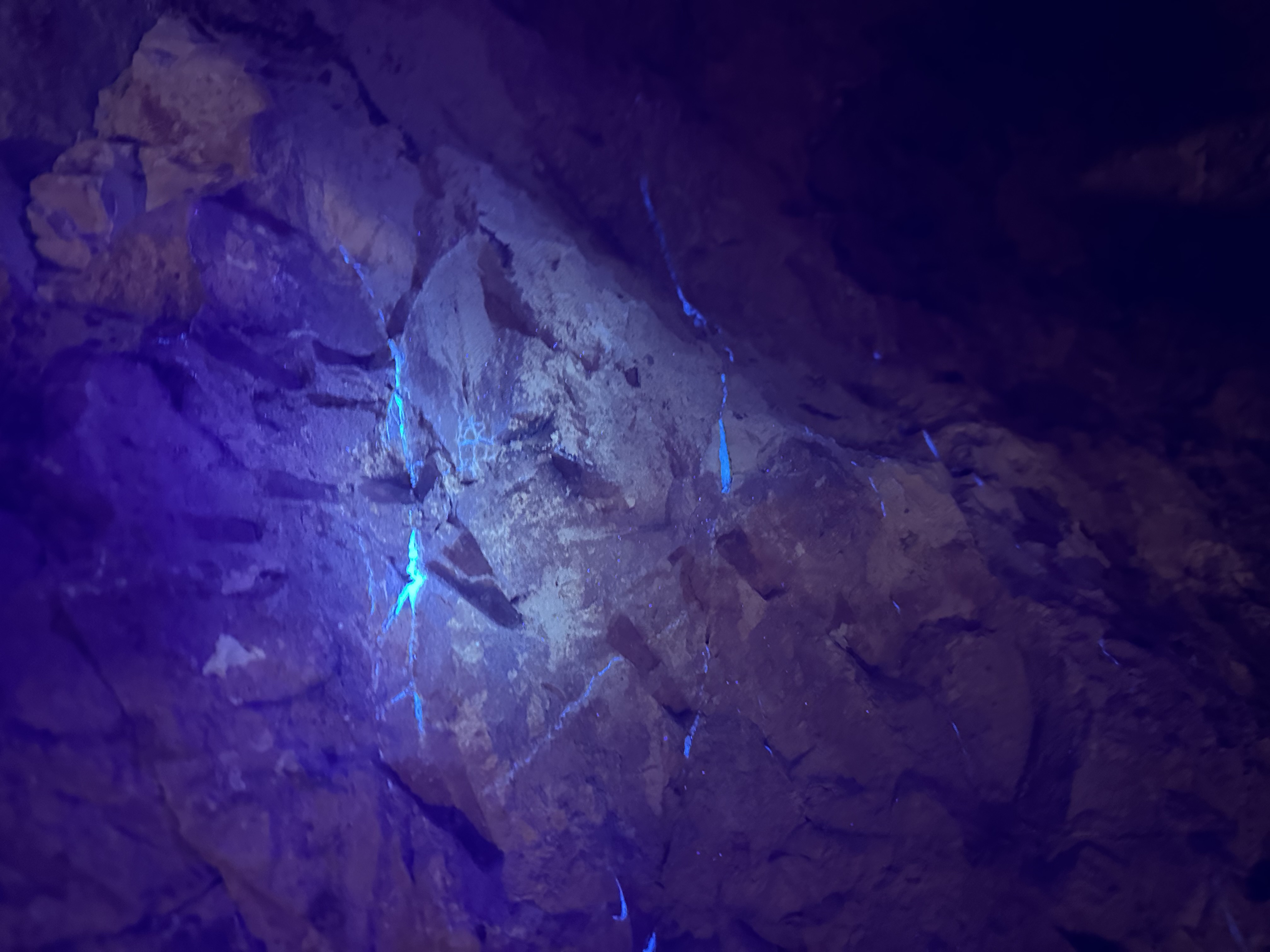
We didn't suddenly become millionaires and retire from travelling Australia, but that's not really the point.
For the kids especially, there's something pretty cool about digging through material from one of the world's best-known opal fields and finding your own little pieces.
There is a public noodling area in town, and several of the mine attractions also have their own noodling areas.
Just make sure you stick to areas where noodling is permitted.
You definitely don't want to go wandering around active mining claims or through old mining fields looking for opal.
Umoona Opal Mine & Museum
We also visited Umoona Opal Mine & Museum, right in town.
Umoona gives you a broader look at Coober Pedy than simply focusing on mining.
There are underground displays, an underground home, mining history, Aboriginal history and interpretation, fossils, opal displays and information about the ancient inland sea that once covered the region.
It's a good place to start if you've just arrived in Coober Pedy because it gives you some background before you head out exploring everything else.
Once you understand the geology, mining and underground lifestyle, the town starts making a lot more sense.
Old Timers Mine
Another underground stop was Old Timers Mine.
The original mine dates back to 1916, right back near the beginning of Coober Pedy's opal mining history.
You can walk through the original underground workings, see natural seams of opal and explore old underground homes.
It gives you a completely different perspective to some of the newer mining attractions.
One of the things we found interesting about Coober Pedy was that visiting several underground attractions didn't really become repetitive.
Each one tells a different part of the story.
Tom's shows more of the working mine and mining techniques.
Umoona covers the broader history and geology.
Old Timers takes you back to the early days of mining.
Together, you start getting a much better understanding of how the town developed.
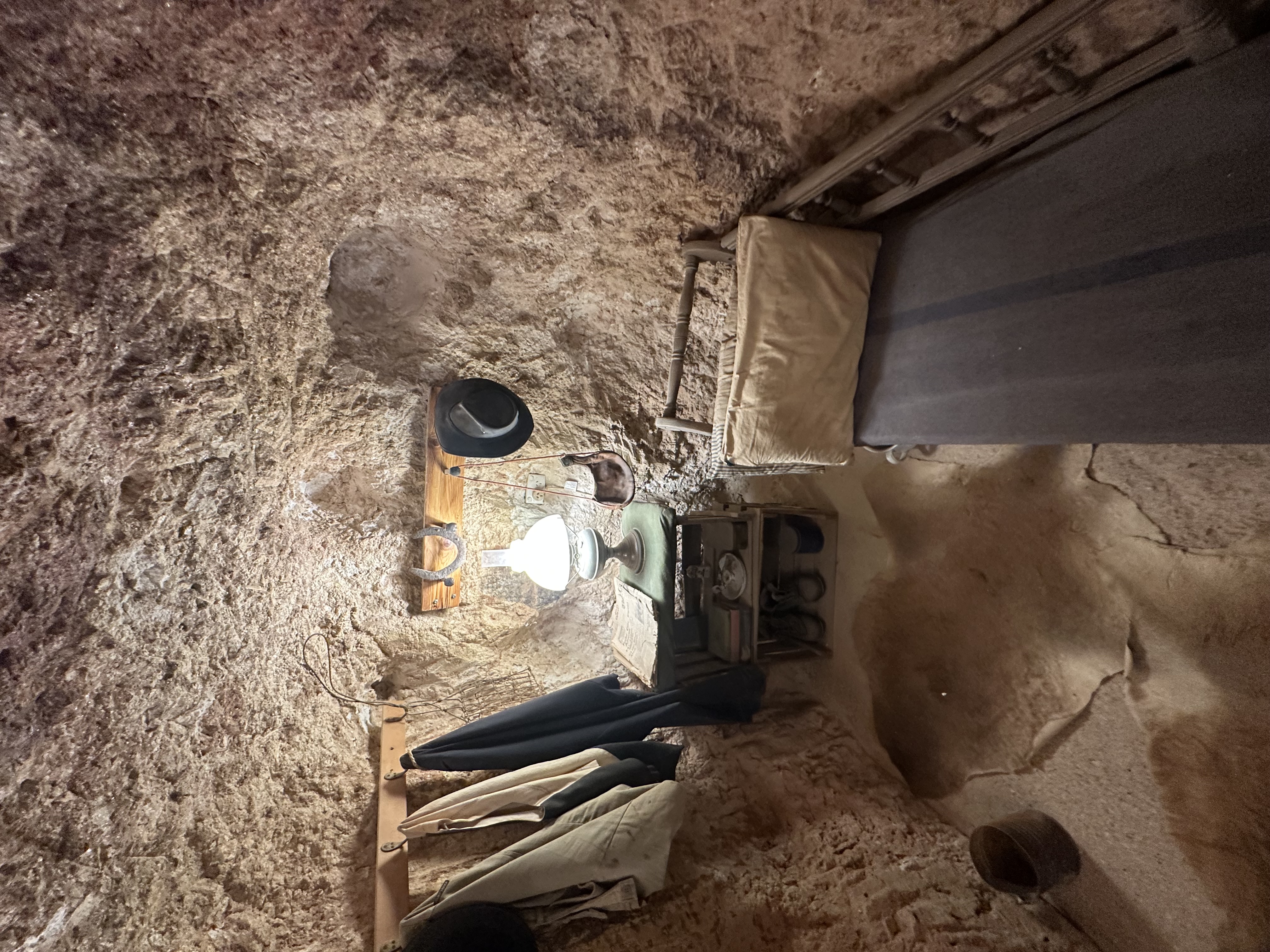
Faye's Underground Home
You can learn plenty about underground living in a museum.
But walking through a genuine underground home is different.
Faye's Underground Home gives you a look at how people actually lived underground in Coober Pedy.
It's an authentic dugout rather than a purpose-built tourist recreation.
And once you walk inside, you understand why people did it.
Outside, Coober Pedy can be hot, dry, dusty and windy.
Underground, the temperature immediately feels different.
It also makes you realise how far underground living developed beyond the early basic miners' dugouts.
Some homes became huge, with multiple rooms excavated straight into the surrounding rock.
Need another room?
Start digging.
Although in Coober Pedy there's always the possibility you could find opal while doing it.
Opal Shops, Cutting and Polishing
Obviously we couldn't spend days in the Opal Capital of the World without checking out some opal shops.
We visited Opal Cave Shop and got to see more of the cutting and polishing side of the industry.
Looking at rough opal compared with the finished product gives you a much better appreciation of the skill involved.
Something that looks fairly ordinary can reveal incredible colour once it's properly cut and polished.
And something that looks promising might turn out to be nothing special.
That uncertainty is a big part of what has kept people digging holes around Coober Pedy for more than 100 years.
Everyone is looking for the next good stone.
Desert Cave
We also checked out the underground displays around Desert Cave.
By this point we'd spent a fair bit of time underground, but it still feels strange walking through commercial spaces built straight into the rock.
Coober Pedy hasn't simply preserved underground living as a historical attraction.
People still live and work this way.
There are underground homes, shops, churches, galleries and accommodation throughout town.
It's one of the things that makes Coober Pedy genuinely different rather than simply another old mining town.
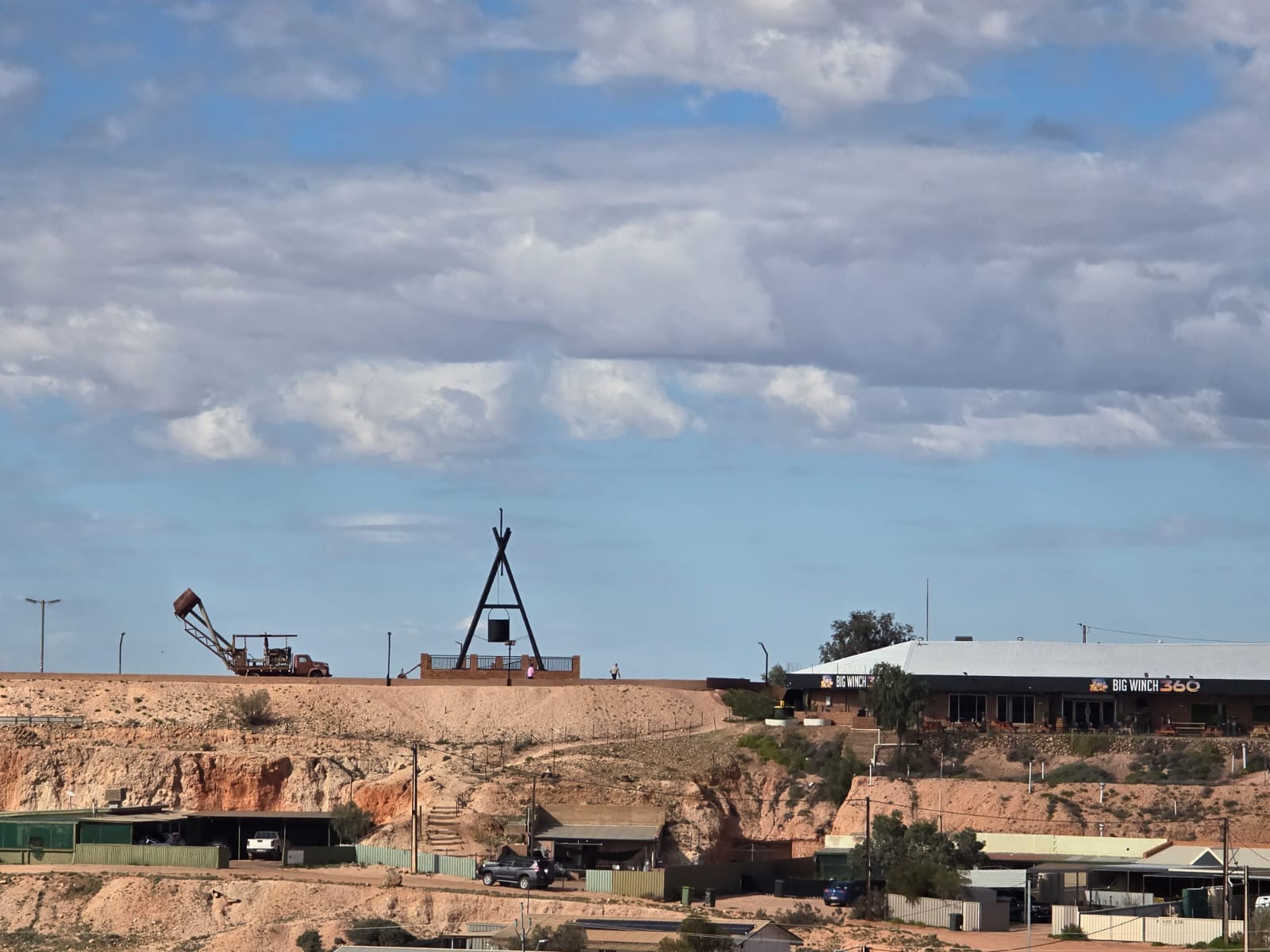
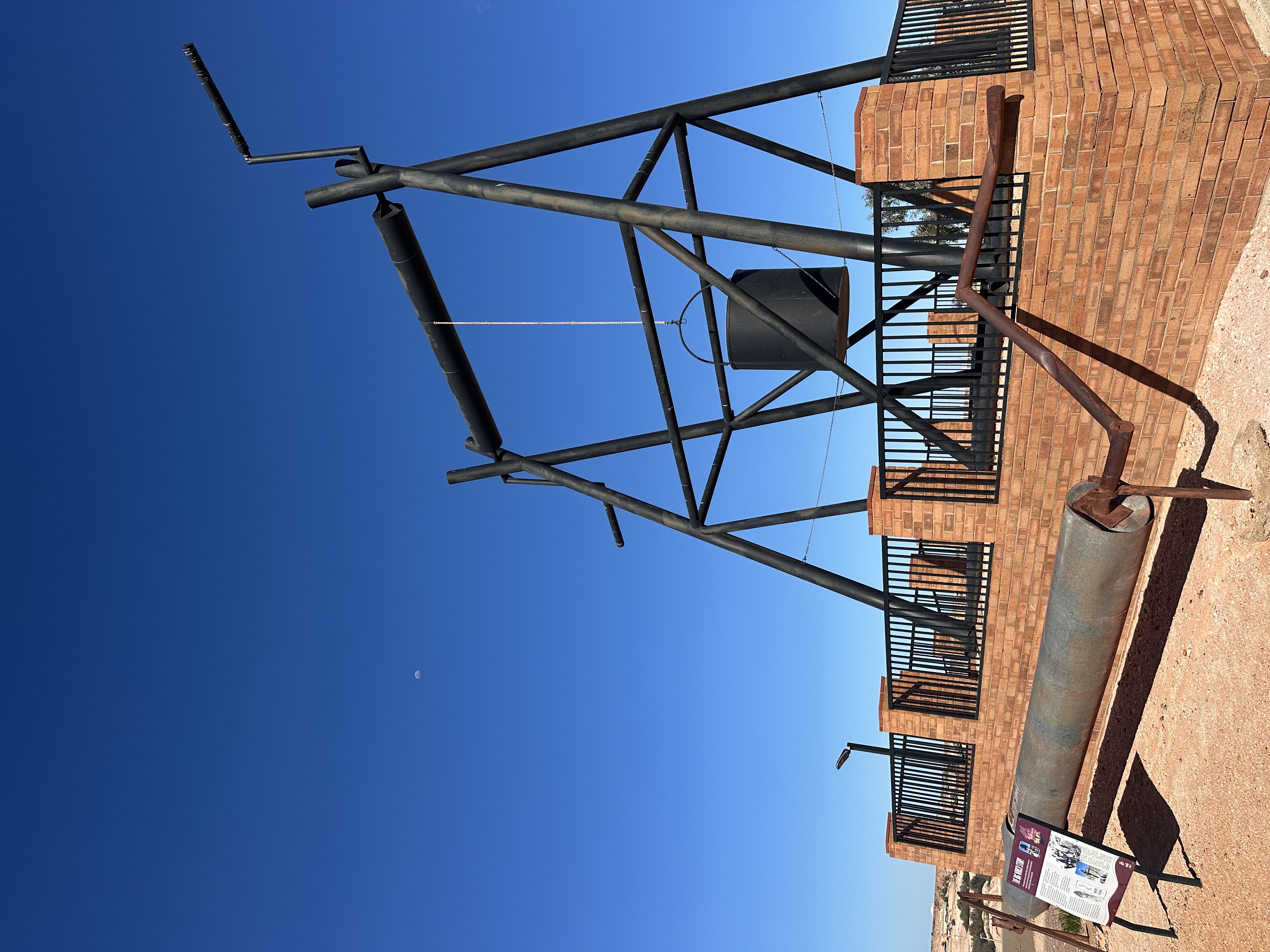
The Big Winch
Sitting above town is one landmark that's pretty hard to miss.
The Big Winch.
The original structure was built in the 1970s as a tribute to Coober Pedy's opal mining industry.
Today, the Big Winch area sits high above town and is a good spot to look back across Coober Pedy and the surrounding landscape.
It's quirky.
It's oversized.
And it somehow fits Coober Pedy perfectly.
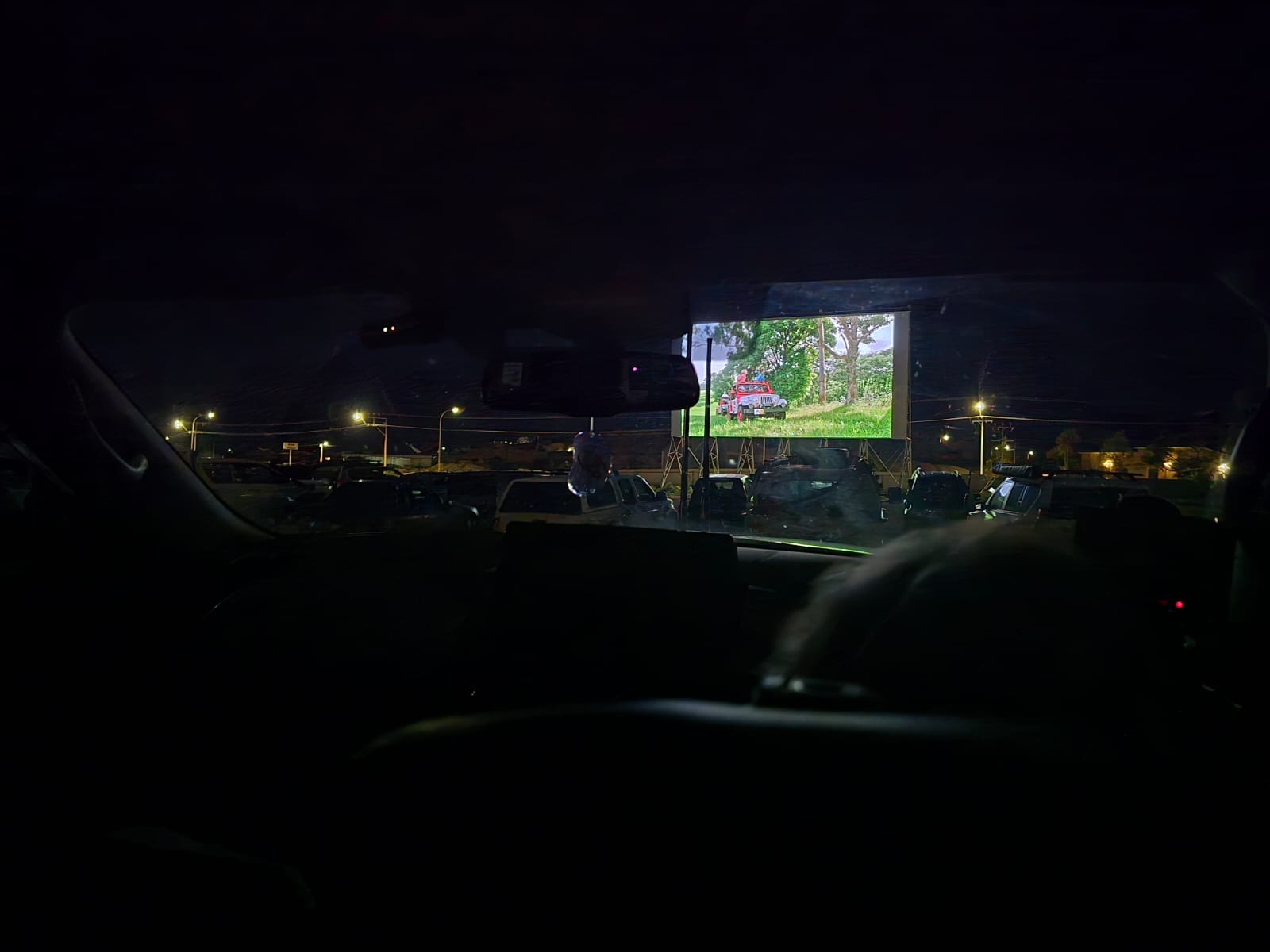
Coober Pedy Drive-In
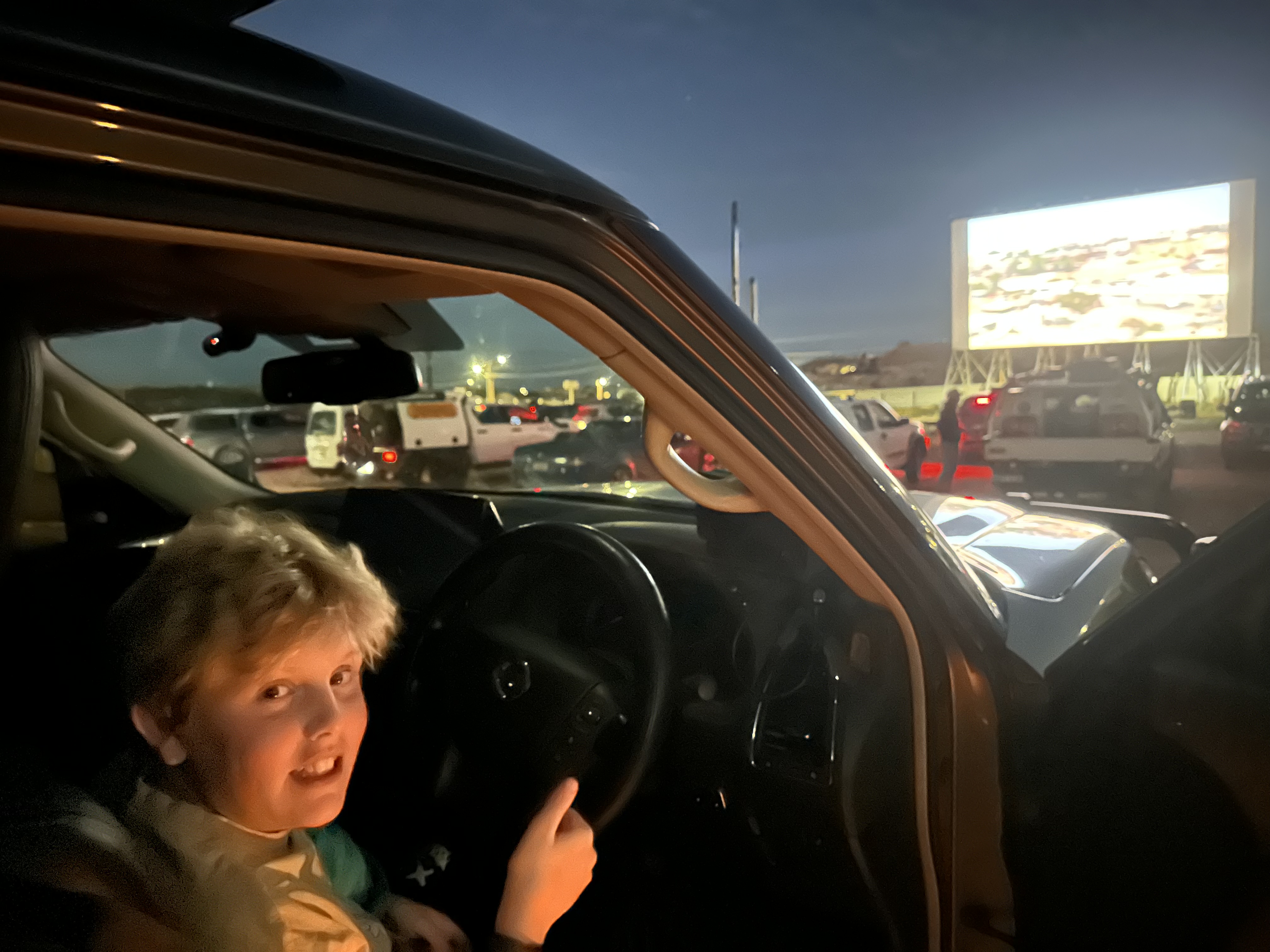
Coober Pedy also has one of Australia's surviving drive-in cinemas.
The Coober Pedy Drive-In opened in 1965 and has remained part of the local community ever since.
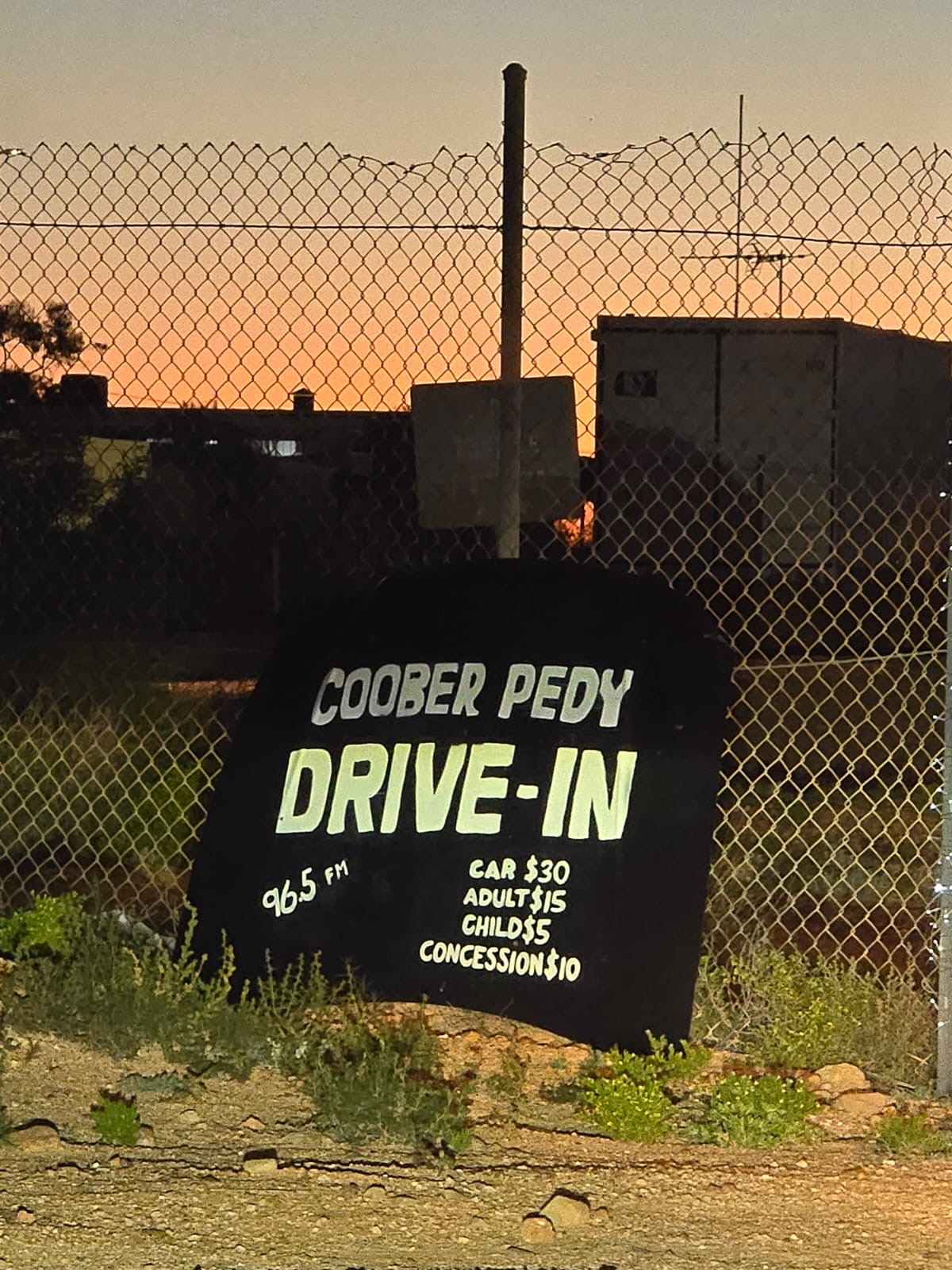
There probably aren't too many places more appropriate for an old-school drive-in than an outback mining town surrounded by a landscape that looks like another planet.
The area around Coober Pedy has also been used as a filming location for a number of movies over the years, which isn't surprising once you see the landscape for yourself.
Kanku–Breakaways Conservation Park
You definitely need to get out of town while you're in Coober Pedy.
One of the best drives is out to Kanku–Breakaways Conservation Park.
It's only around 30km from town, but the landscape feels completely different.
The conservation park covers around 15,000 hectares and is Aboriginal owned.
The country opens into huge plains surrounded by colourful mesas, hills and exposed rock formations.
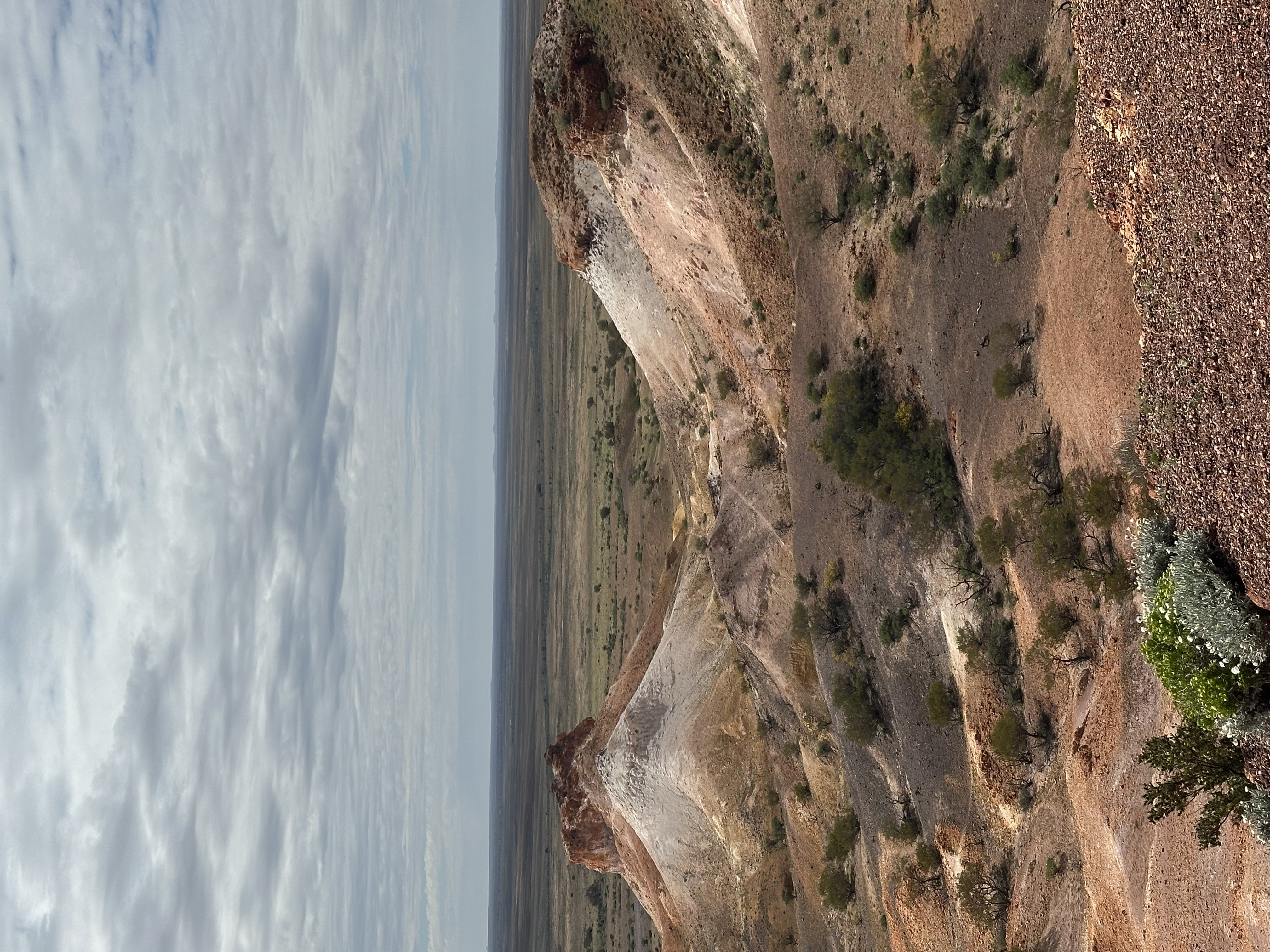
After spending so much time underground in Coober Pedy, heading out to the Breakaways gives you the complete opposite experience.
Big sky.
Huge views.
And almost nothing around you.
Sunset is particularly popular out here as the colours across the landscape change.
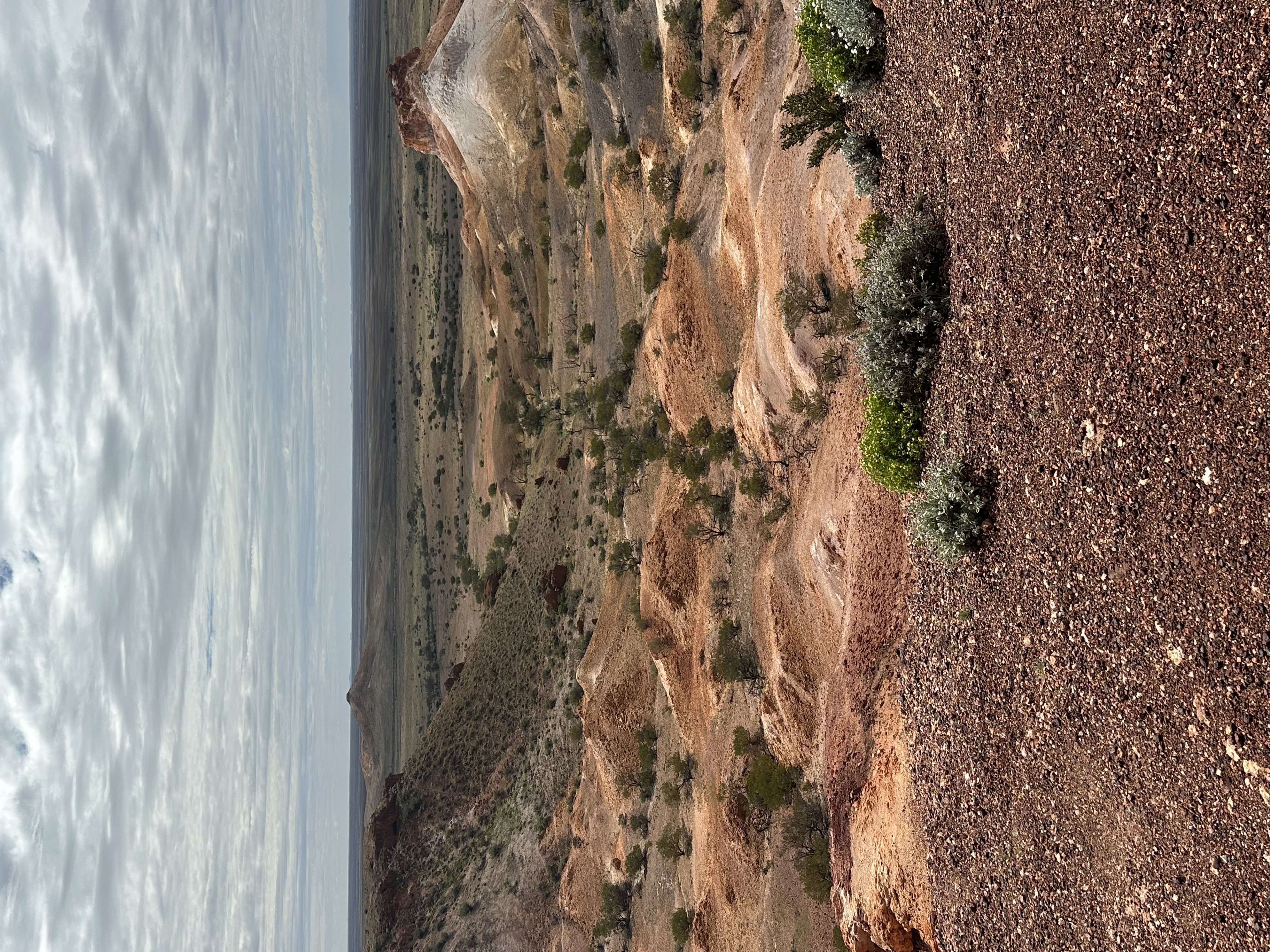
If you've got the time, don't rush it.
Take some food, find a spot and enjoy being out there.
A permit is required to enter Kanku–Breakaways Conservation Park, so check the current requirements and road conditions before heading out.
The Moon Plain
The country around Coober Pedy can look genuinely alien.
The Moon Plain is probably the best example.
It's a huge, flat, almost vegetation-free landscape stretching out towards the horizon.
There's not a lot there.
And that's exactly what makes it interesting.
The landscape around Coober Pedy has been used in a number of film productions because it can convincingly stand in for another planet or some kind of post-apocalyptic world.
Driving through it, you can see why.
The Dog Fence
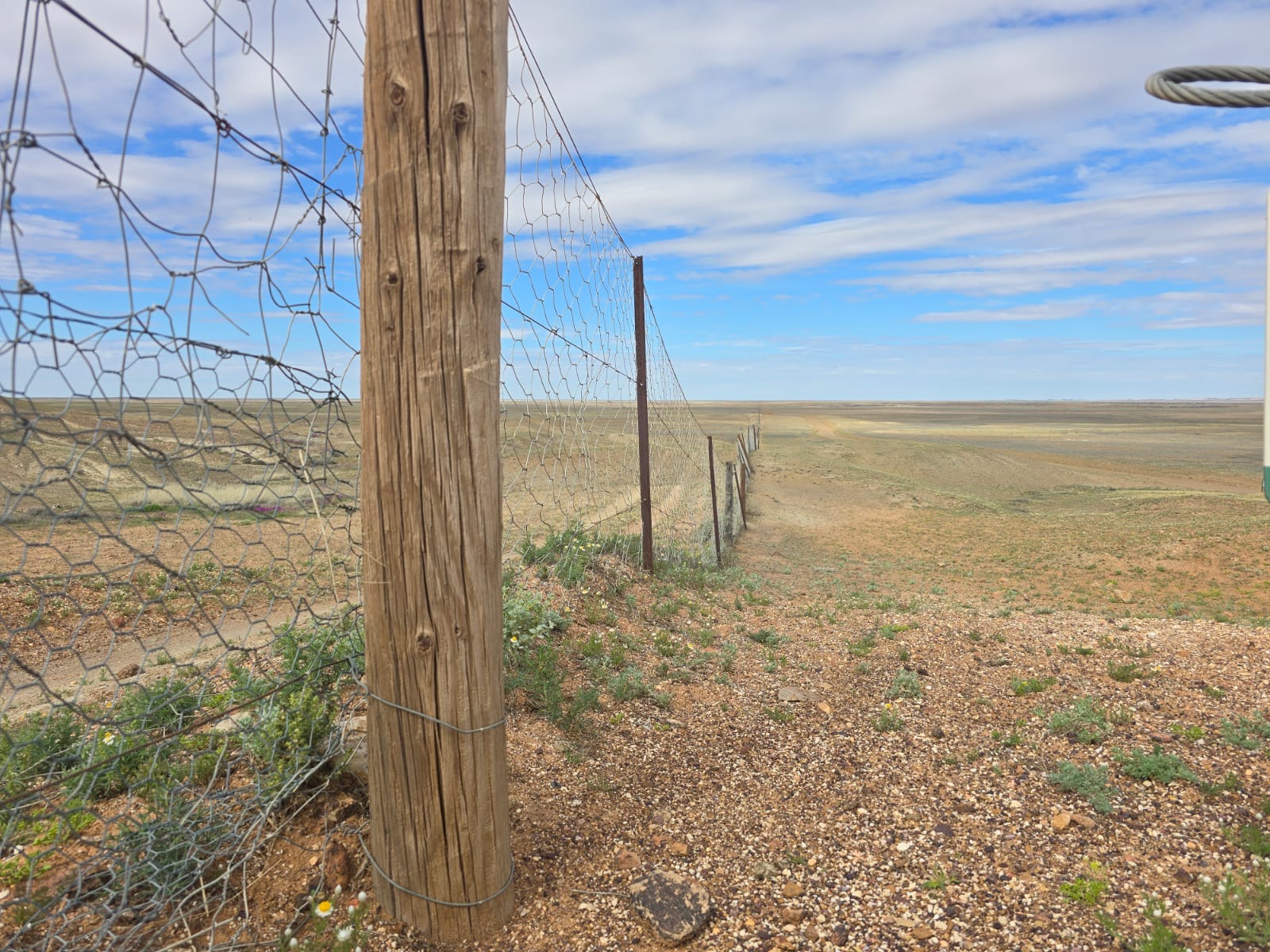
While exploring outside town we also checked out part of the Dog Fence.
It doesn't sound particularly exciting when you describe it.
It's a fence.
But the scale of the thing is what makes it interesting.
The Dog Fence stretches for thousands of kilometres across Australia and was built to restrict dingoes from moving into sheep grazing areas further south.
Standing beside one tiny section of something that stretches across such a huge part of the country gives you a completely different appreciation of it.
It's one of those classic outback attractions where the story behind it is bigger than what you're actually looking at.
Eating in Coober Pedy
We also grabbed a feed at Coober Pedy Outback Bar & Grill and Pizza while we were in town.
After spending the day crawling around underground mines, looking for opal and exploring the surrounding country, sometimes the attraction you're most interested in is dinner.
For such an isolated town, Coober Pedy has a reasonable range of places to eat along with supermarkets, fuel and most of the basic services travellers need before continuing north or south along the Stuart Highway.
It's a good place to restock before heading further into the outback.
Travelling Coober Pedy With Kids
We found Coober Pedy surprisingly good with kids.
A lot of historical towns can involve walking around reading signs and looking at old buildings.
Coober Pedy is much more hands-on.
The kids can:
- Go underground into real mines
- Wear mining helmets and use black lights
- Search for opal
- Try noodling
- Explore underground houses
- See mining machinery working
- Learn how opal is cut and polished
- Explore the Breakaways
- See the Dog Fence
- Learn about the ancient inland sea
- Discover fossils and geology
Chad and Quin were interested because there was usually something to actually do, rather than simply something to look at.
And obviously the possibility that the next rock they picked up might contain opal helped.
How Long Do You Need in Coober Pedy?
We'd originally planned a shorter stay.
Then we extended it.
That probably answers the question.
If you're travelling the Stuart Highway, we'd allow at least two or three full days in Coober Pedy.
Three or four nights would be even better if you don't want to rush.
You could easily spend one day exploring the underground attractions and mines, another around town and another heading out towards Kanku–Breakaways, the Moon Plain and Dog Fence.
If you're travelling with kids, allow some time for noodling too.
They aren't going to want to leave after five minutes.
When Is the Best Time to Visit Coober Pedy?
The main travelling season generally runs from around March through to November.
During these months the days are usually much more comfortable for exploring, although desert nights can get cold.
Summer is a different story.
Temperatures regularly climb above 35°C and conditions can become extremely hot.
If you're travelling through during the hotter months, the underground attractions suddenly make even more sense.
Fuel, Supplies and Services
Coober Pedy is isolated, but it's also a major service centre for this part of the Stuart Highway.
You'll find:
- Fuel
- Supermarkets
- Food and takeaway
- Caravan parks
- Accommodation
- Mechanical services
- Visitor Information Centre
- Hospital and medical services
- Opal shops
- Tours and attractions
If you're heading further north towards Marla and Alice Springs, or south towards Glendambo and Port Augusta, it's a sensible place to refuel and restock.
A4GW Tips for Coober Pedy
Don't make it an overnight stop
If your schedule allows it, give Coober Pedy a few days.
There is much more here than we expected.
Do at least one proper underground mine tour
Walking into an underground shop isn't the same thing.
Getting into an actual mine and learning how people chase opal gives you a much better understanding of the town.
We really enjoyed Tom's.
Let the kids go noodling
Don't expect to fund the rest of your Big Lap with what you find.
But it's good fun.
Be careful around the opal fields
There are old shafts everywhere.
Stay in designated visitor and noodling areas and don't wander around mining claims.
Get out to the Breakaways
Coober Pedy isn't only about what's underground.
The surrounding country is a huge part of the experience.
Stay for a sunset
Whether you're out at the Breakaways or sitting up at Tomcat Hill, sunset across this country is worth slowing down for.
Don't judge Coober Pedy when you first drive in
We'll admit it.
It's a strange-looking place.
Dust.
Dirt piles.
Mining equipment.
Random machinery.
Underground buildings.
Not a lot of green.
Give it a chance.
Once you understand why everything is there, Coober Pedy becomes much more interesting.
Is Coober Pedy Worth Visiting?
Definitely.
Coober Pedy isn't polished.
And that's probably why we liked it.
It's weird, rough around the edges and completely different to almost anywhere else we've visited in Australia.
The history isn't sitting behind glass.
People still live underground.
People are still mining opal.
There are still claims surrounding town.
There are still people arriving hoping they'll find something everyone else missed.
And once you leave town, you're straight back into enormous outback country.
We came to Coober Pedy wanting to finally spend enough time to see what the place was actually about.
We explored underground mines, searched for opal, visited dugouts, learnt about the mining history, checked out the shops, drove through the surrounding country, visited the Breakaways and Dog Fence and spent a few nights sitting above it all at Tomcat Hill.
Then we extended our stay.
That's probably the best review we can give it.
Coober Pedy Quick Guide
- Location: Stuart Highway, South Australia
- Distance from Adelaide: Around 850km
- Distance from Alice Springs: Around 680km
- Population: Around 2,000
- Known for: Opal mining, underground homes and its unique outback landscape
- Best time to visit: Generally March to November
- How long we'd allow: 5–7 days
- Where we stayed: Tomcat Hill Caravan Park
- Our favourite experiences: Tom's Opal Mine, noodling, exploring the underground attractions and Kanku–Breakaways
- Good with kids: Yes
- Caravan friendly: Yes
- Fuel and supplies: Available in town
- Worth more than an overnight stop: Definitely
Our Coober Pedy Videos
We ended up with so much footage from Coober Pedy that we split the trip across two episodes of our All 4 Good Wins YouTube series.
Coober Pedy Part 1 follows our time at Tom's Opal Mine and gets properly into the underground mining side of town.
Coober Pedy Part 2 continues exploring Coober Pedy, including more of the town, opals and our encounter with the Shonky Opal Buyer.
If you're planning your own trip, have a watch to see what these places actually look like before you arrive.
All 4 Good Wins
We're travelling Australia full time as a family of four, sharing the places we visit, where we stay, what we find and the gear we use along the way.
For more Australian travel guides, 4WD trips, caravan stops and places worth exploring, keep following All 4 Good Wins.