
Southern Calamari
Squid, Calamari
Sepioteuthis australis
Overview
Southern Calamari are a favourite family catch from South Australian jetties and seagrass shallows, taken on squid jigs. They hover in loose schools around structure, grab jigs and small baits readily, and their sweet white flesh makes them one of the best eating catches in the state. Fun to catch, easy to clean and genuinely exciting on light gear, squid are a perfect target for beginners and kids.
Quick Info
Identification
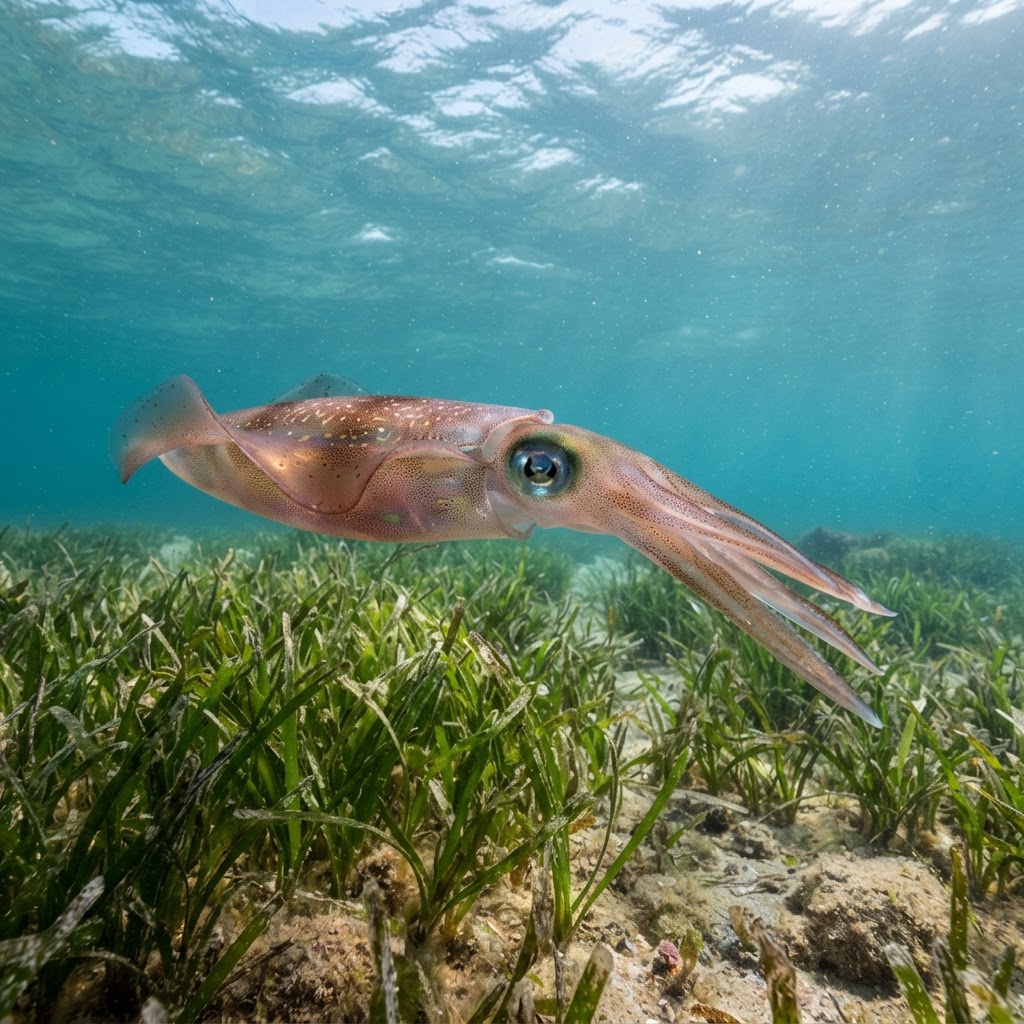
A squid with a broad, diamond-shaped body and wide rounded fins running almost the full length of the mantle. Colour changes rapidly from pinkish-brown to mottled orange-red with mood and surroundings, and the size of the swimming fins is a good guide to the size of the squid on your jig.
Long fins extending nearly the full mantle length (the 'longfin' squid), 8 short arms plus 2 long tentacles, flashing chromatophore colours, and a clear plastic-like internal quill rather than bones.
Gould's Squid (shorter fins, more offshore waters) — any squid caught around SA jetties, bays and seagrass shallows is almost certainly Southern Calamari.
Where to Find Them
Typical depth: 1–15 m
Fishing environments: Jetty, Shore, Boat
When to Fish
How to Catch Them
Cast squid jigs toward seagrass edges, jetty pylons and anywhere small baitfish gather. Work the jig with a slow lift-and-drop retrieve near the bottom and around structure — squid often follow the jig in, so occasionally let it sit dead still before lifting again.
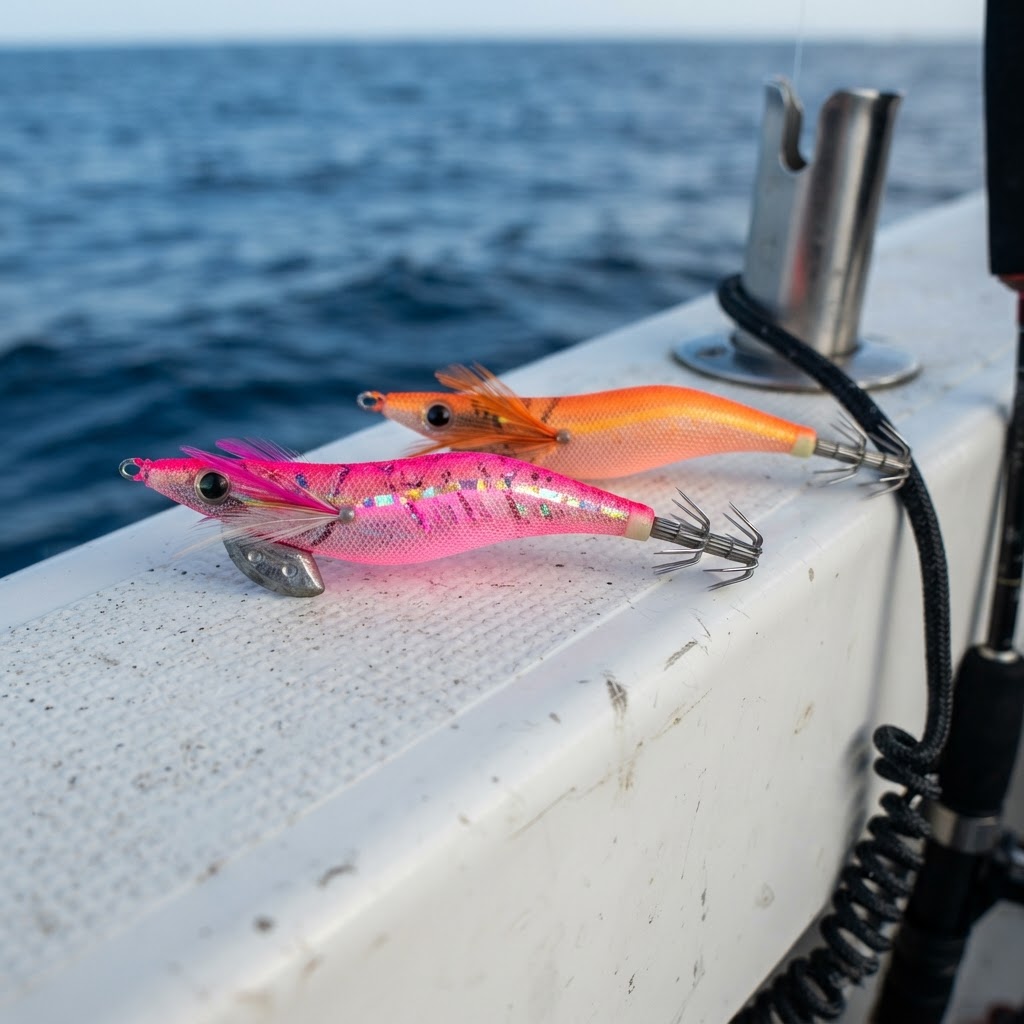
Cast a quality squid jig, let it sink, then lift-and-hold the rod tip in slow, jerky pulses so the jig sinks back down naturally between lifts. Natural and pink colours cover most SA situations.
Slow and erratic — a lift-and-drop cadence. Squid grab on the pause, so hold the rod tip up and lift in sharp little hops rather than winding continuously.
Weight on the line rather than a thump — the squid wraps its arms around the jig and simply feels heavy, then pulses with jets of water as it tries to escape.
Lift the rod tip firmly and steadily once the weight comes on. Squid hook themselves on the jig's barbless crown — keep steady tension and wind down; violent strikes simply tear the arms free.
Buy a couple of quality jigs in natural and pink, fish them slowly near structure at dawn or dusk, and keep the retrieve simple. Squid ink and jet water when landed — stand back and expect to get wet.
Retrieving jigs too fast, fishing open water away from structure, lifting the jig out of the strike zone too quickly, and stopping the retrieve while a squid is still chasing rather than letting it drop.
Best Baits
Current SA Fishing Rules
CURRENT SA FISHING RULES
Do not target, take or possess this species in Gulf St Vincent & Kangaroo Island.
Do not target, take or possess this species in Spencer Gulf.
Always check current regulations before fishing. Fishing rules and closures can change.
Keeping Your Catch
Handle by the body, never the arms. Watch the sharp beak between the arms and the hard chitin edge of the body — use pliers to extract the jig.
Not required for squid — dispatch quickly by spiking between the eyes or with an iki-jime spike, then gut immediately.
An ice slurry immediately after capture keeps squid firm and white — squid spoil quickly if left warm in a bucket.
Cleaning & Filleting
Pull the head and arms away from the body, remove the clear plastic quill, the gut and the ink sac (keep the ink if you like it for cooking), then peel away the mottled skin.
Squid are not filleted — the cleaned hood (tube) and tentacles are the table fare. Score the inside of the hood in a light crosshatch so it curls when cooked.
The thin mottled skin peels away easily once cleaned; most cooks remove it for clean white calamari, though a little left on is harmless.
Squid have no bones — instead there is a clear, plastic-like internal shell (the quill) that simply pulls free from the body cavity.
Cooking
Score the hoods and flash-fry in hot oil for 30-60 seconds until they curl — overcooked calamari turns rubbery. Salt and pepper squid from fresh Southern Calamari is a classic, and tentacles are great on the same hot pan.
Where to Catch Them in SA
Best here: Spring & Autumn
Best here: Spring & Autumn
Best here: Spring & Autumn
Best here: Spring & Autumn
Best here: Spring & Autumn
Best here: Spring & Autumn
Best here: Spring & Autumn
Best here: Spring & Autumn
Best here: Spring & Autumn
Best here: Spring & Autumn
Best here: Spring & Autumn
Best here: Spring & Autumn
Best here: Spring & Autumn
Best here: Spring & Autumn
Best here: Spring & Autumn
Best here: Spring & Autumn
Best here: Spring & Autumn
Best here: Spring & Autumn
Best here: Spring & Autumn
Best here: Spring & Autumn
Best here: Spring & Autumn
Best here: Spring & Autumn
Best here: Spring & Autumn
Best here: Spring & Autumn
Best here: Spring & Autumn
Best here: Spring & Autumn
Best here: Spring & Autumn
Best here: Spring & Autumn
Best here: Spring & Autumn
Best here: Spring & Autumn
Best here: Spring & Autumn
Best here: Spring & Autumn
Best here: Spring & Autumn
Best here: Spring & Autumn
Best here: Spring & Autumn
Best here: Spring & Autumn
Best here: Spring & Autumn
Best here: Spring & Autumn
Best here: Spring - Autumn

A4GW CREW
Get the good stuff from A4GW straight to your inbox.
No spam. Unsubscribe anytime.