Southern Rock Lobster
Crayfish, Cray
Jasus edwardsii
Overview
Southern Rock Lobster are the legendary crayfish of South Australia's reef country, taken recreationally with registration, pots and strict gear and season rules. The sweet, firm tail meat is world class, but every aspect of the fishery is tightly regulated — know the current rules before you wet a line or drop a pot.
Quick Info
Identification
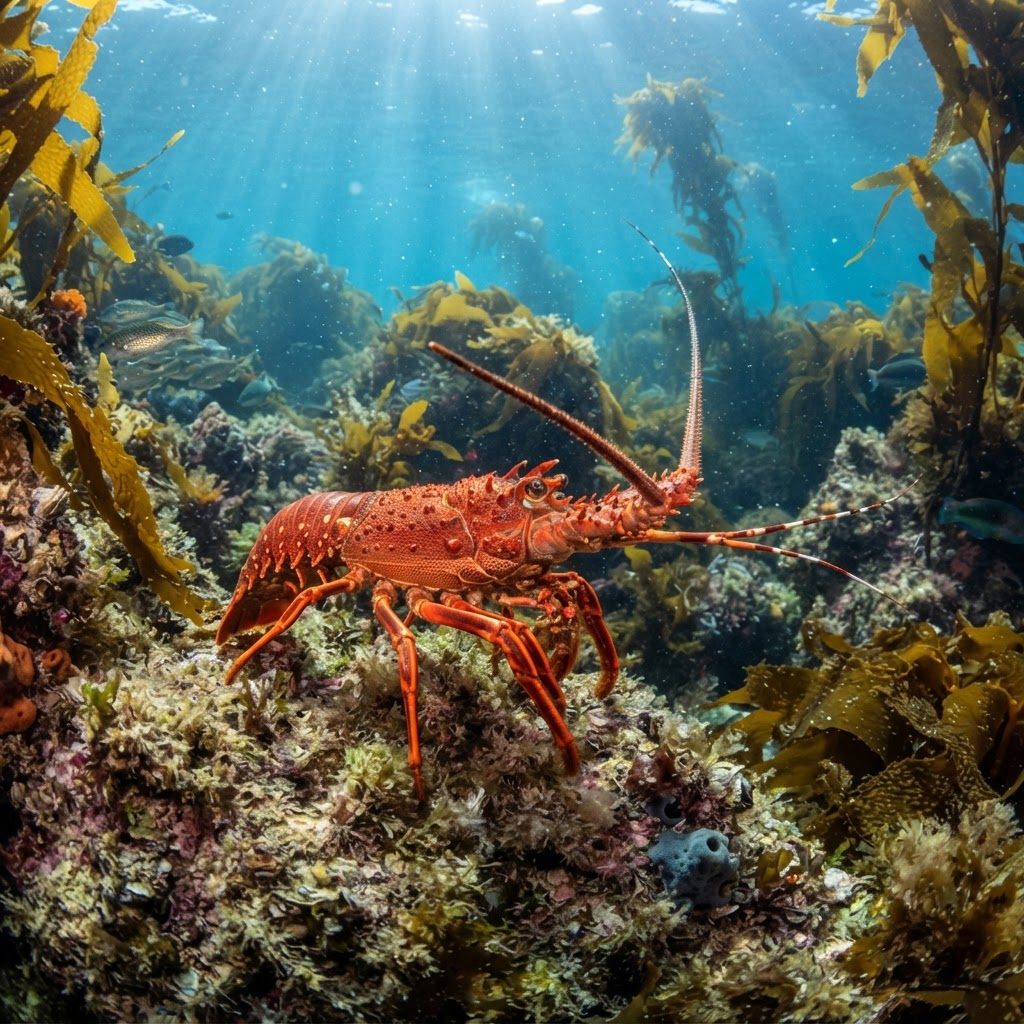
A large spiny lobster with no front claws, a dark red to orange shell with pale spines, and two long whip-like antennae that are longer than the body. Juveniles are paler and mottled.
A spiny carapace with prominent horns over the eyes, no front claws (unlike many northern rock lobsters), long antennae, and a powerful tail.
Southern Rock Lobster is the only rock lobster in SA's colder waters — recreational catches in SA are almost exclusively this species. Eastern Rock Lobster occurs much further north.
Where to Find Them
Typical depth: 1–40 m
Fishing environments: Boat, Shore
When to Fish
How to Catch Them
Recreationally taken with registered pots and nets under strict PIRSA gear rules, or by hand while diving. Every cray must be measured to legal size and tagged/registered exactly as the current rules require — the rules are specific and strictly enforced.
Pots are baited with fish frames and offaly baits set on known cray ground; divers target ledges and caves by hand, taking only legal-size crays that can be safely secured.
Not applicable — success is pot placement, bait and timing rather than a strike.
Not applicable — crays are caught in gear or by hand, never on a hook.
Learn the rules before you go — registration, gear specifications, season dates, measuring and tagging all apply. Many first-timers start by snorkelling shallow reef to learn how crays hold up under ledges before investing in pots.
Not registering or tagging gear, keeping short or berried crays, pulling pots outside the gear rules, and mis-measuring — measure the carapace properly rather than by eye.
Best Baits
Current SA Fishing Rules
CURRENT SA FISHING RULES
Special limits and conditions apply in Southern Zone (east of longitude 139°E to the VIC border) — see below.
Special limits and conditions apply in Northern Zone (west of longitude 139°E to the WA border) — see below.
Method: Carapace length
Measured at: Measured along the middle and on the top of the carapace (main body shell), from the front edge of the groove between the antennae (frontal tubercle) to the rear edge of the carapace, not including any hairs attached to the carapace. The measuring device must fit firmly into the groove between the antennae.
Always check current regulations before fishing. Fishing rules and closures can change.
Keeping Your Catch
Grab from behind by the body and avoid the spines. Keep them in a wet hessian bag — current rules require them to be kept whole and in carapace form until processed as permitted.
Not applicable — lobsters are dispatched immediately before cooking, most commonly chilled on ice first.
Keep lobsters cool and moist in a wet hessian bag or ice slurry until cooked; never let them sit dry or in warm freshwater melt.
Cleaning & Filleting
Dispatch quickly (chill or spike), then split in half and remove the gut and the sandy head content before cooking.
Rock lobster are not filleted — the tail meat is the prize, pulled or cut out after cooking, along with leg meat for stock and pasta.
The shell (exoskeleton) is discarded after cooking — it turns bright red-orange when boiled.
No bones — crustaceans have an external shell. Leg meat is extracted with a rolling pin or scissors.
Cooking
Boil or steam for 8-10 minutes depending on size, or split and grill with garlic butter. The sweet, firm tail meat needs nothing more than lemon.
Where to Catch Them in SA

A4GW CREW
Get the good stuff from A4GW straight to your inbox.
No spam. Unsubscribe anytime.